
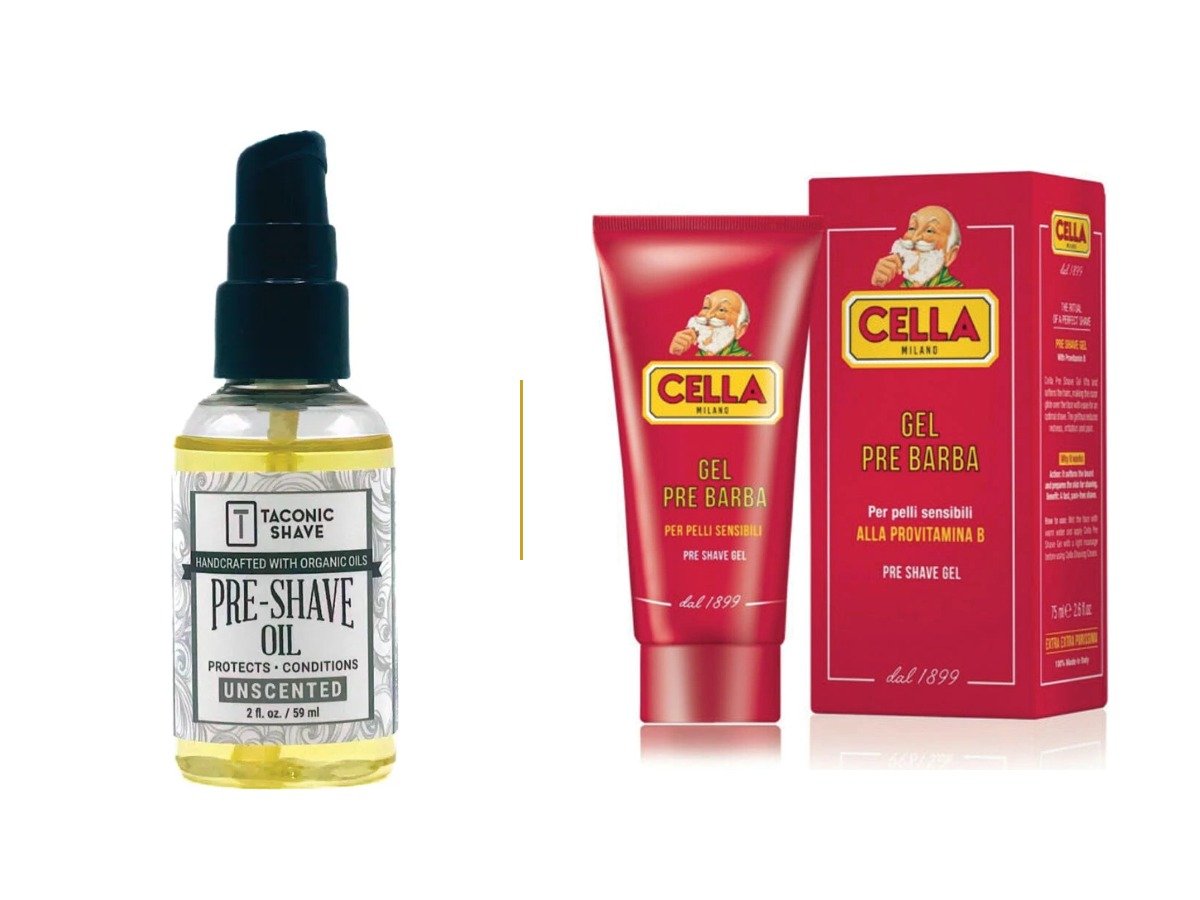
Pre-Shave Oil vs Gel: Which One Belongs in Your Routine
Pre-shave oil and pre-shave gel behave differently under lather. What each one does, how much you use, and which suits your soap and your water.
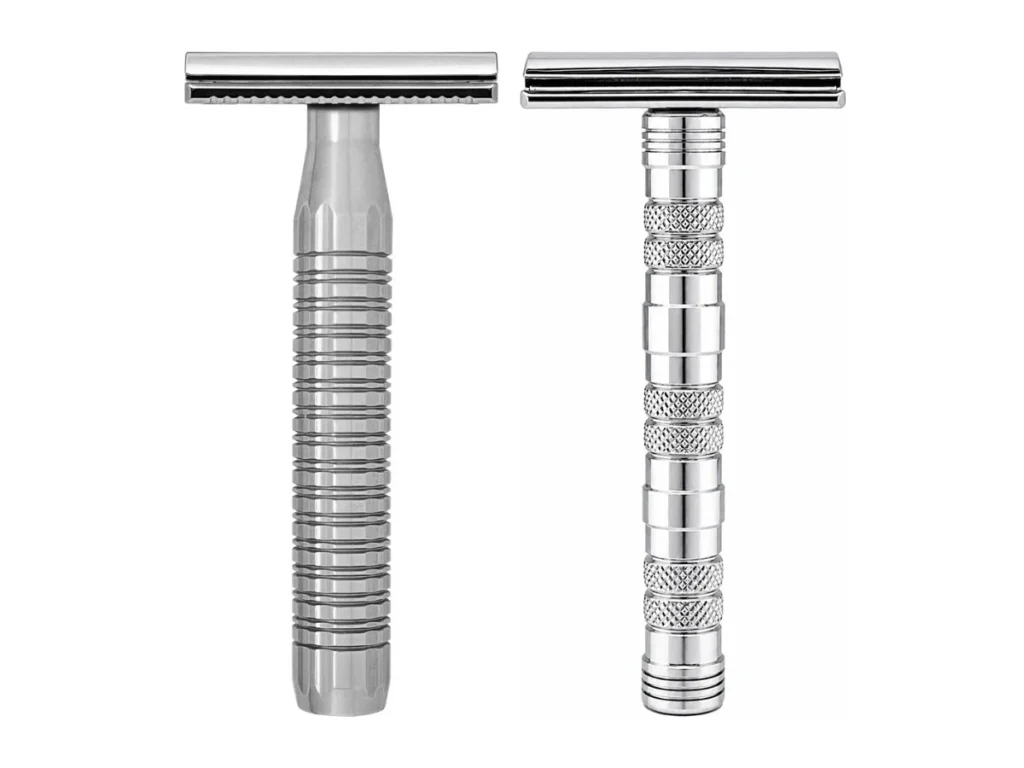
Two safety razors sit side by side. One is a Parker three piece that costs less than a good bottle of wine. The other is cut from a solid bar of stainless steel and costs several times as much. Both take the same double edge blade, both hold it at roughly the same angle, and both will shave you properly. So what is the extra money actually buying?
It is not buying a sharper shave, and it is not buying weight. What it buys is the absence of a coating, and everything that follows from that.
Almost every safety razor under about a hundred dollars is made from brass that has been formed to shape and then electroplated. Parker publishes the material for each model on its own site. The 26C open comb is described as a genuine brass frame with a graphite dark gray electroplated finish. The 96R butterfly is a genuine brass frame, graphite-gray and chrome plated. In both cases the structure is brass and the colour you see is a plated layer sitting on top of it.
That method is why the affordable end of the market has so much variety. Once the tooling exists, a different plating bath gives a different razor. Parker’s own three piece range runs to satin chrome, graphite and rose gold on what is fundamentally the same brass underneath.
The other method is to machine the razor from solid bar stock. Rex Supply Co. cuts the Envoy XL from marine grade stainless steel in the USA. The Goodfellas’ Smile machines the Lybra from solid 316L stainless in Italy. Nothing is plated. The surface your fingers touch is the same metal that runs all the way through the handle.
An electroplated finish is thin, and it is a separate layer from the metal beneath it. Over years of daily use it can chip at a sharp edge, wear at a contact point, or lift where water is allowed to sit. When it does go, the brass underneath is exposed and can discolour. That is not a manufacturing fault. It is simply what a coating does eventually.
The places it tends to show first are the threads, because they are assembled and disassembled every few days, the rim of the cap where the blade clamps, and the very bottom of the handle if the razor is stored standing in a puddle.
A solid stainless razor has no layer to lose. This is the whole argument for the tier, and it is a mechanical one rather than a marketing one.
It is worth keeping the timescale honest, though. A plated razor that is rinsed, shaken out and left somewhere dry can look close to new for many years. Most of the plating damage people describe online comes from razors that were stored wet or knocked about in a washbag. Our guide to razor and blade care covers the routine, and it takes about ten seconds a day.
This is the part that surprises people, so here are the published figures side by side.
| Razor | Body material | Published weight |
| Parker 96R | Brass frame, chrome plated | 2.85 oz |
| Parker 26C | Brass frame, electroplated | 3.4 oz |
| The Goodfellas’ Smile Dominus | Chrome plated brass | approx. 100.8 g |
| Rex Supply Co. Ambassador | Marine grade stainless | 3.73 oz / 106 g |
Brass is slightly denser than the austenitic stainless steels used for razor bodies, so for an identical shape the brass version would, if anything, come out marginally heavier. The Dominus is a good illustration: it is chrome plated brass, CNC machined in Italy, and at roughly 100.8 g it is heavier than plenty of stainless razors costing three times more.
Weight comes from how much metal the designer chose to put into the handle and the head, not from which of the two metals it is. If heft is what you are after, read the published weight and ignore the material entirely.
One note on Parker’s published dimensions, because it trips people up. When Parker gives a single length figure it is the total length of the assembled razor including the head, not the handle on its own, unless Parker separately states a handle length. The 26C is 3 3/4 in overall and the 96R is 4 in overall. Comparing one of those to another brand’s handle-only measurement will give you a misleading answer.
While the plating is intact, a chrome plated brass razor resists corrosion perfectly well. The two materials only part company once the surface is damaged. A scratch that goes through chrome exposes brass, and brass tarnishes. A scratch on a solid stainless razor exposes more stainless.
The grades chosen for the machined razors are picked with that in mind. 316L is the alloy specified where wet and salty conditions are expected, and Rex describes its own steel as marine grade. In a bathroom with a window and a fan this may never matter to you. In a windowless bathroom, or in a home where the razor lives on a shelf in the shower, it can matter a great deal.
The same logic applies one level down, to the blade rather than the razor, and we covered that separately in carbon steel vs stainless double edge blades.
A machined razor is cut rather than cast, and the head geometry is cut to the same numbers every time. That is why the makers in this tier publish gap figures with confidence. Rex gives the Envoy XL a fixed blade gap of 0.025 in, with a handle length of 3.71 in (94.25 mm) and an overall length of 3.96 in (100.5 mm). The Ambassador replaces the fixed gap with a dial covering 0.012 in to 0.052 in (0.30 mm to 1.32 mm) across 13 marked settings from 0.5 to 6.5, and Rex serial numbers each one and covers it with a lifetime warranty.
There is also a quieter point about the threads. Stainless is harder than brass, so stainless threads tend to tolerate a clumsy assembly better. For many shavers this never comes up once in a decade, but it is part of why these razors get handed down.
If the adjustable idea is new to you, adjustable vs fixed safety razors is the better starting point than a spec sheet.
The everyday tier is plated brass, and it is where most of the double edge safety razor range sits. The 26C is an open comb, the 96R is a butterfly, and between them the Parker line covers most head types and most finishes. If you are still deciding between head designs, we have written up both open comb vs closed comb and butterfly vs three piece.
A step up, still plated, is the Dominus: CNC machined in Italy from chrome plated brass and finished in polished chrome. It shows that careful machining and a coating are not mutually exclusive.
The solid stainless tier is the Envoy XL, the Lybra and the Ambassador, the last of which also lives in adjustable safety razors. Three razors, three countries of manufacture, one shared property: there is nothing on the outside that can come off.
Plated brass makes sense if this is your first double edge razor, if you want to try an open comb or a butterfly without committing a large sum to the experiment, if you want a particular colour, or if you want a second razor for travel that you would not be heartbroken to lose. It is also the sensible answer if you simply do not want to spend the money, and there is nothing wrong with that. Our guide to choosing your first safety razor is written for exactly this decision.
Solid stainless makes sense if you already shave with a double edge razor most days and know you will keep doing it, if your bathroom is humid and badly ventilated, if you want one razor that you never replace, or if you want a machined adjustable and the repeatability that goes with it.
What we would not do is push a beginner straight into the machined tier. The razor is not the variable that decides whether your first month goes well. Blade choice, angle and pressure are, and those are learned just as well on a forty dollar Parker as on a three hundred dollar Rex.
The routine is the same for both and it takes seconds. Rinse the head under hot water with the blade still loosely in place, shake the water out, loosen the cap a turn so the parts are not clamped wet against each other, and leave the razor somewhere air can reach it. Do not leave it standing in a pool on the sink. A razor stand keeps it off the surface and lets it drain.
On solid stainless this is housekeeping. On plated brass it is the single thing that decides whether the finish still looks right in ten years. Either way it is the cheapest maintenance in the bathroom.
Pre-shave oil and pre-shave gel behave differently under lather. What each one does, how much you use, and which suits your soap and your water.
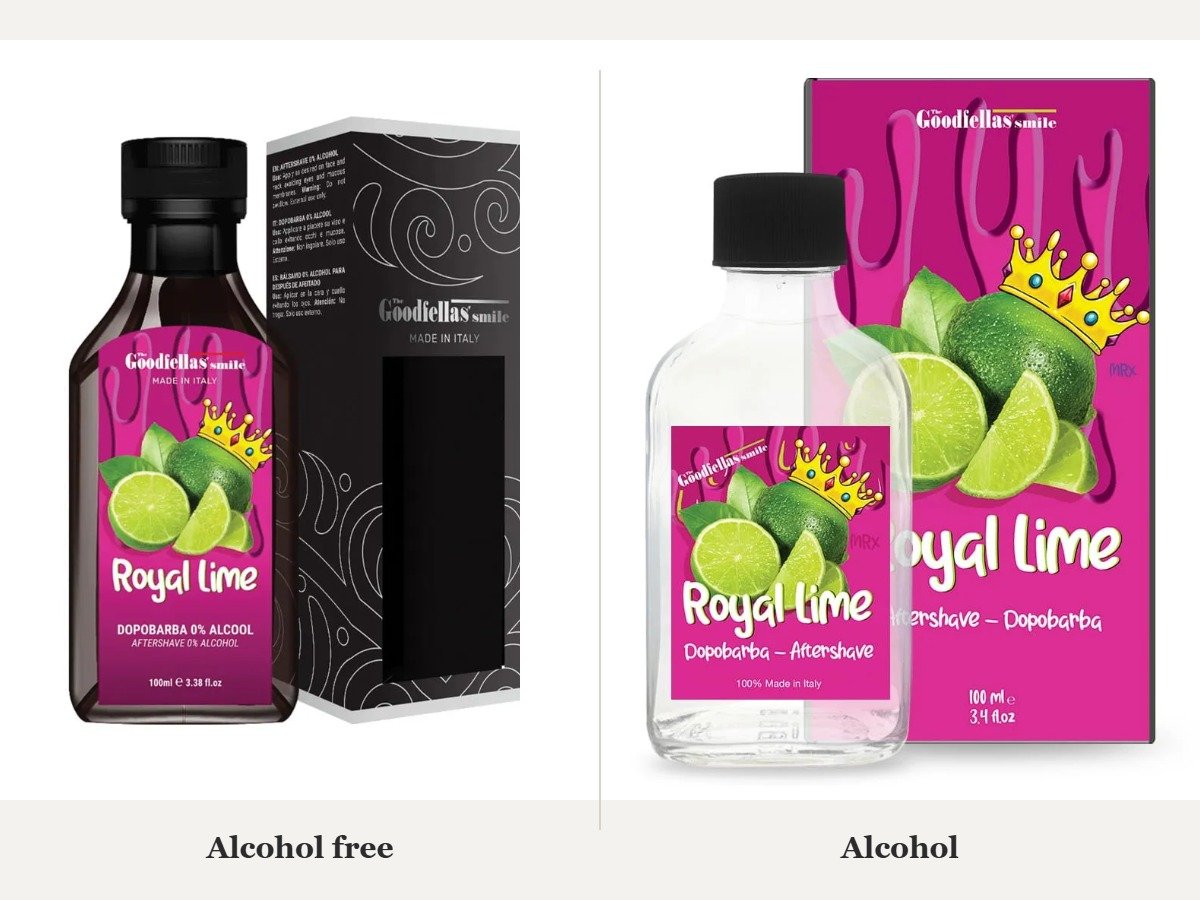
The same Goodfellas scent made both ways, plus Taconic and Cella, and how to pick the finish that suits your shave.
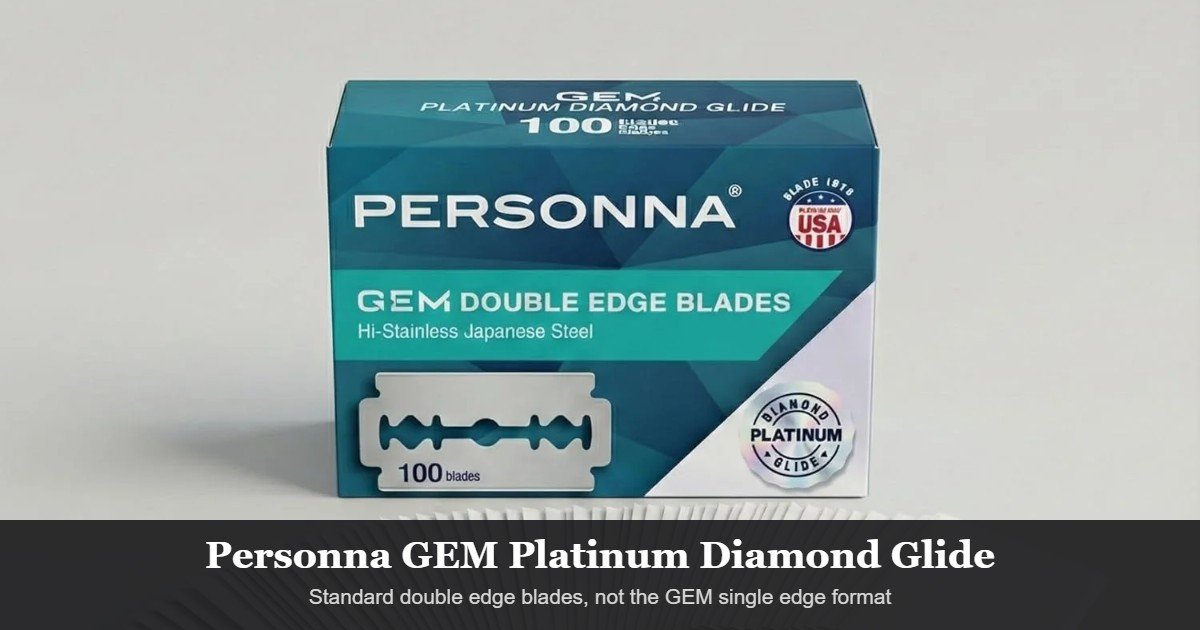
What the Personna GEM Platinum Diamond Glide actually is, what its carton says, and what wet shavers on both sides are saying.