
Shaving Brush Basics
Shaving Brush Basics
A shaving brush does three things: it carries water, it builds lather from soap or cream, and it lifts the beard so the blade meets hair rather than skin. Which brush suits you comes down to how stiff you want the bristles, how much water you want it to hold, and what you are lathering.
We stock brushes from Parker, Omega, Simpsons and others, in every bristle type described below.
Boar
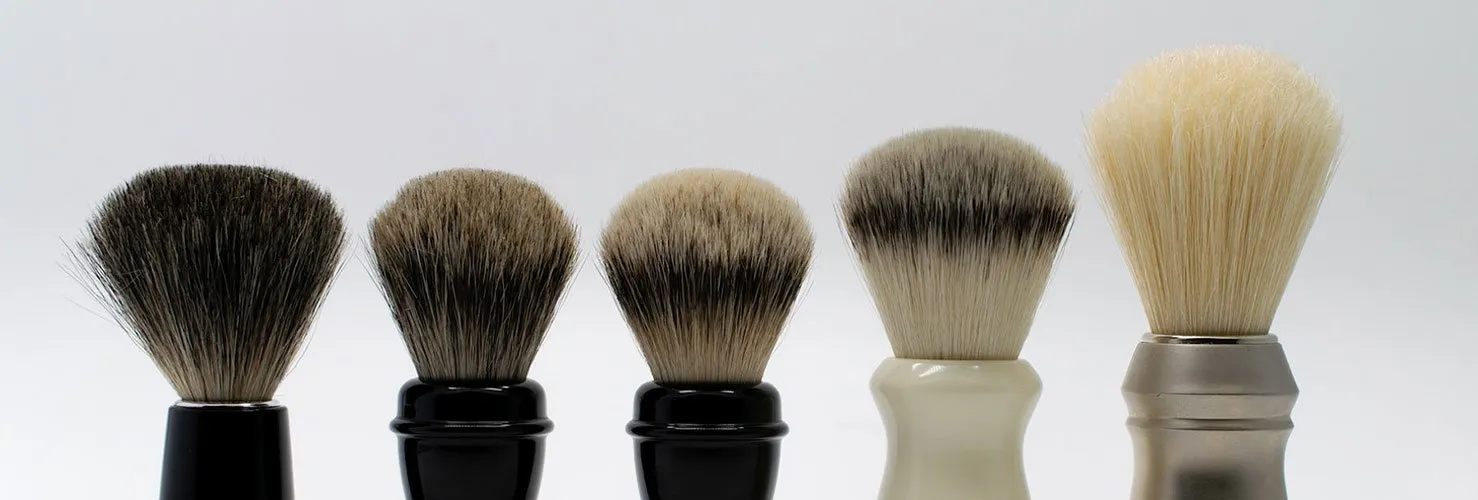
Boar bristle is the traditional workhorse and generally the least expensive way into a good brush. The bristles are stiff, which makes boar brushes good at working a hard soap and at scrubbing lather into dense stubble. A new boar brush is stiff and scratchy and softens with repeated use as the tips split, which is normal and not a defect. Boar typically holds less water than badger, although knot size and construction affect this as much as the bristle does.
Synthetic
Synthetic fibre has improved enormously in the last decade. Modern synthetic brushes are generally soft at the tips, dry quickly and release water fast, which makes them easy to lather with and well suited to travel. They contain no animal hair, which matters to some customers. They typically hold less water than badger, and because they give water up quickly they can flood a face lather if you are heavy handed.
Black badger
Black badger is generally the stiffest badger grade. It typically holds a good deal of water and usually has enough backbone to work a hard puck. Shavers who like a brush that pushes back tend to prefer it. It is not the softest option, so it is less popular with people who find brushes scratchy. How a particular brush feels also depends on the knot, so two brushes of the same grade can differ noticeably.
Pure badger
Pure badger is generally softer than black badger and usually costs a little more. It sits in the middle of the badger range: soft enough to be comfortable for most people, with enough backbone to be useful.
Silvertip badger
Silvertip is typically the softest and most expensive badger grade. It generally holds the most water and has the gentlest tips, which is why it suits shavers with sensitive skin and anyone who wants the brush itself to be part of the pleasure of the shave. As with the other grades, knot construction affects the result as much as the grade name does.
SHAVING BRUSH CARE
Care matters more than grade for how long a brush lasts. After shaving, rinse the brush thoroughly in clean warm water until no soap remains. Shake it out gently, reshape the knot with your fingers and leave it to dry in open air. Water left sitting where the bristles meet the handle is what loosens knots over time, so what matters is that the brush can dry freely rather than being put away damp. A brush stand is a convenient way to store one. Do not dry a brush on a radiator or with a hairdryer.