
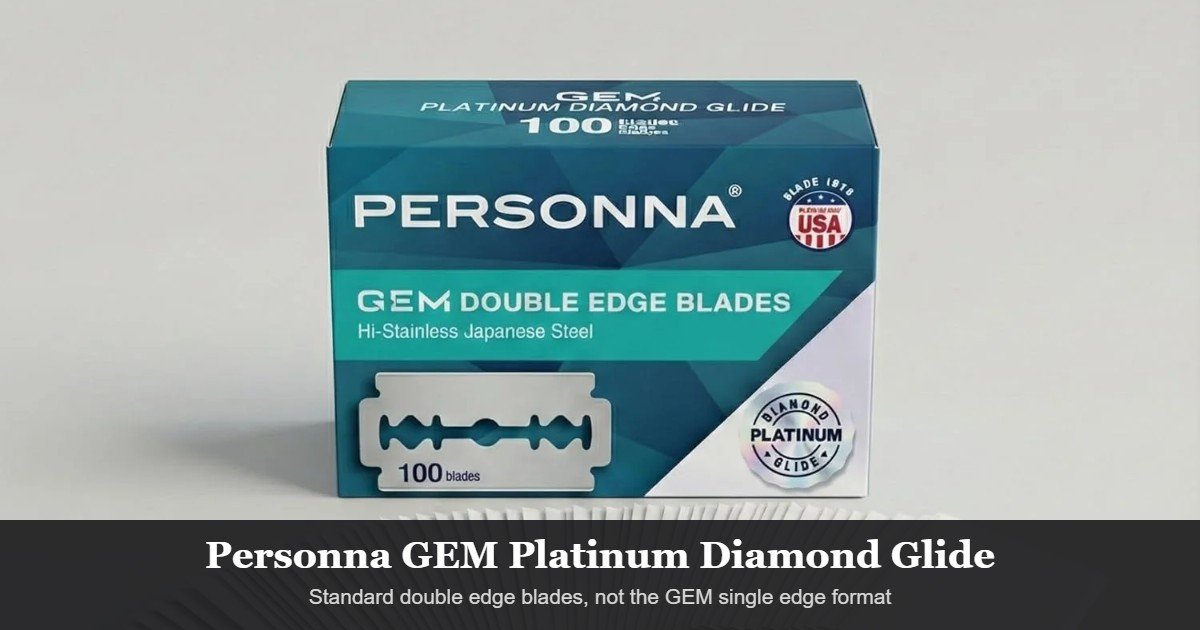
Personna GEM Platinum Diamond Glide DE Blades: Why They’re Getting Attention
What the Personna GEM Platinum Diamond Glide actually is, what its carton says, and what wet shavers on both sides are saying.
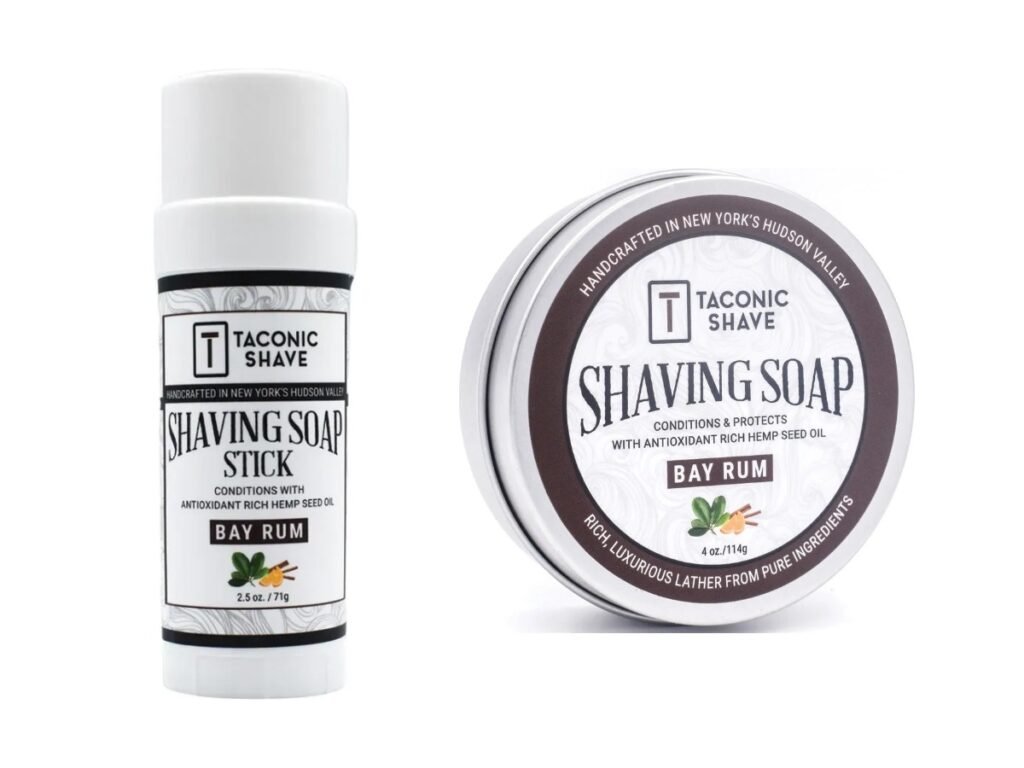
A shave stick and a tub of shaving soap can hold exactly the same soap. Taconic Shave makes the point better than anyone: the Bay Rum Shaving Soap Stick and the Bay Rum Shaving Soap puck carry the same published ingredient list, are handmade in the same workshop in upstate New York, and differ only in the shape the soap is pressed into.
So the shave stick vs tub soap question is not really about which soap is better. It is about which delivery system suits the way you shave, how much room you have on the shelf, and whether the soap has to travel. Here is what actually separates them, with the published figures rather than the usual generalities.
A tub soap is the traditional arrangement. A hard puck or a soft croap sits in a mug, a bowl or its own jar, you work a damp brush over the surface until the brush is loaded, and you build the lather either in the bowl or on your face. Nothing about the soap decides that for you.
A shave stick removes the vessel entirely. Taconic packages its soap in an applicator that twists up from the bottom, exactly like a deodorant stick. Its published directions are short: wet your face, twist the dial at the bottom to dispense soap, rub it generously over the beard, then build the lather on your face with a wet brush. The soap goes straight where it is needed and nothing but the brush touches it afterwards.
That is the whole mechanical difference, and almost everything else follows from it. If you have not settled the earlier question of soap against cream, our guide to shaving soap vs shaving cream covers that first decision; this one sits a level below it, inside the soap category.
The Taconic pairing gives a clean comparison because the soap is identical. The stick is 2.5 oz, roughly 71 g. The puck is 4 oz, roughly 114 g, and three inches round. In other words the stick holds a little under two thirds of the soap that the puck does, in a package you can close with one hand.
Taconic states that the stick is highly concentrated and that one lasts a long time. That is the maker speaking about its own product rather than a measured figure, and nobody publishes a reliable shave count for a soap, so read it as a description of the format rather than a number you can plan around. What can be said with confidence is that a stick applied directly to the beard puts soap only where it is going to be used, while loading a brush from a puck always leaves some soap on the brush and in the bowl.
Look across the rest of the Shave Soaps category and the size range on the tub side is far wider than anything the stick format offers. Parker publishes 50 g for its Sandalwood and Shea Butter Travel Shave Soap in a watertight container, and 100 g for the full size Sandalwood and Shea Butter Shave Soap, which is also a three inch round puck. The Goodfellas Smile Italian soaps arrive in 100 ml jars. At the far end, Cella Milano sells its semi-soft tallow soap as a one kilogram barber shop brick. There is no one kilogram shave stick, and there never will be.
This is the part most comparisons skip. A shave stick is built for face lathering. The soap is rubbed onto wet stubble, the brush works it up where it sits, and the lather never exists anywhere else. You can shave slivers off a stick into a bowl if you insist, but at that point you have bought an awkwardly packaged puck.
A tub leaves the choice open. Load the brush from the puck and you can build the lather in a bowl, in a scuttle, or on your face, and change your mind next week. If you have never compared the two approaches, bowl lathering vs face lathering sets out what each one gives you, and our guide to building a good lather covers the water-by-degrees method that both rely on.
So the honest version of the advice is this. If you already know you are a face latherer, a stick suits you and removes a step. If you like lathering in a bowl, or you have not worked out which you prefer yet, a tub keeps your options open. And if you enjoy the bowl end of the ritual, choosing a bowl or scuttle matters more than the soap format does.
Solid soap is not a liquid, a gel or an aerosol, so it does not count against the carry-on liquids allowance. CATSA lists solid shaving soap plainly: this item is permitted in both carry-on and checked baggage. That is the Canadian screening authority speaking for itself, which is worth more than any retailer summary.
A stick then adds the practical part. It caps shut, it has no bowl to pack, there is nothing to spill into a washbag, and it takes up about as much room as a travel toothbrush. Pair it with a small brush and the whole lathering half of your kit fits in a hand. The Taconic Eucalyptus Mint stick and Parker travel badger brush set is exactly that idea packaged together.
The tub side does have a travel answer, and it is a good one: Parker builds its 50 g soap into a watertight container specifically for the job. But a 50 g tub still needs a brush loaded against it, and it still wants somewhere to sit. If you are putting a razor in a bag as well, our guide to flying with a safety razor from Canada covers the part that actually causes problems at screening, which is the blade rather than the soap.
Choice, mostly. The stick format is a niche, and the numbers show it. Across the whole Shave Soaps category there are three shave sticks in stock, all Taconic, in Bay Rum, Urban Woods and Eucalyptus Mint. Against that sit more than twenty tubs, jars and pucks, from several makers and across a much wider spread of scents.
The tub side also holds the formulations people care most about. Tallow soaps, for instance, come almost entirely in jars and pucks: The Goodfellas Smile makes Tallow N1 and the Shibusa 2 in 100 ml jars, and Cella Milano is semi-soft tallow by the kilogram. If that distinction matters to you, tallow vs vegetable shaving soap explains what changes in the lather. Vegan and vegetable-based options such as the GROOM Shaving Soap, 120 g also live on the tub side.
And a puck sized to a mug is a genuinely pleasant object. Taconic sizes its 4 oz puck at three inches round so it drops into Parker’s Apothecary Shave Mug or any mug or bowl that takes a three inch soap. That is a small thing, but it is the difference between a soap that lives in a mug and one that lives in a drawer. The Shaving Bowls and Mugs range is built around that measurement.
Neither a stick nor a tub lathers itself. The brush is doing the work in both cases, and the format quietly changes what you want from it. Face lathering with a stick asks a little more of the knot, because the brush is being pushed against skin rather than swirled in a bowl, so a brush with some backbone tends to be easier to control. Bowl work is more forgiving and lets a softer knot shine.
If you are choosing your first one, boar, badger or synthetic is the place to start, and the full Shaving Brushes range runs from travel sizes upward.
Buy a shave stick if you lather on your face, if you want the fastest possible route from tap to lather, if bathroom shelf space is tight, or if the soap needs to go in a bag more than a couple of times a year. The format removes a step rather than adding one, and for many shavers that is the whole appeal.
Buy a tub or a puck if you want the widest choice of scents and formulations, if you lather in a bowl or a scuttle, if you like a soap that lives in a mug, or if you simply want more soap for the money you are spending on it. It is also the safer first purchase if you have not decided how you like to lather, because it does not choose for you.
And there is no rule that says one. A puck at home and a stick in the travel bag is a common arrangement, and since the soap inside can be identical, nothing about your shave has to change when you move between them. Browse the full Shave Soaps range to see both formats side by side.
What the Personna GEM Platinum Diamond Glide actually is, what its carton says, and what wet shavers on both sides are saying.
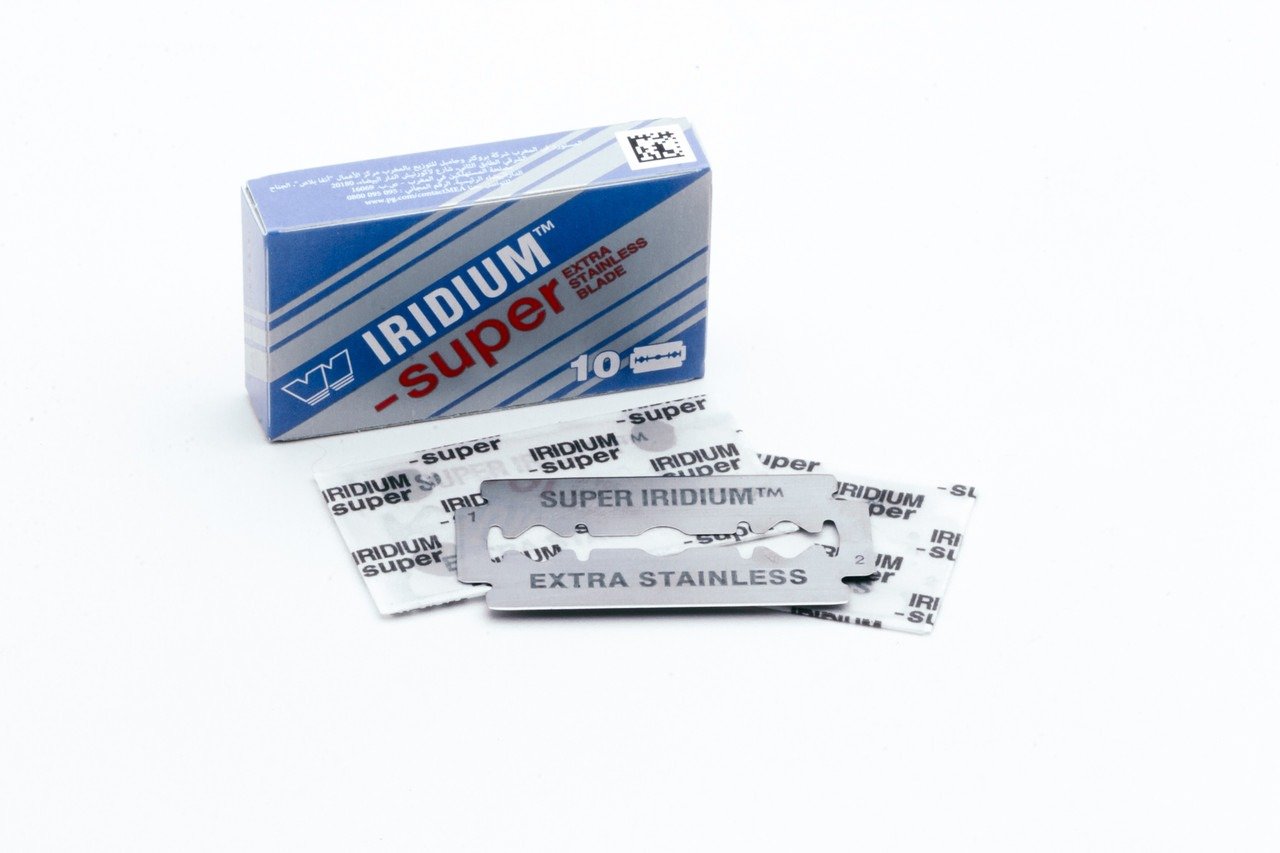
Wizamet Super Iridium has one of the most loyal followings in wet shaving. What experienced shavers actually say about it, where it is made, how it compares to Feather, Nacet and Astra, and why not everyone agrees.
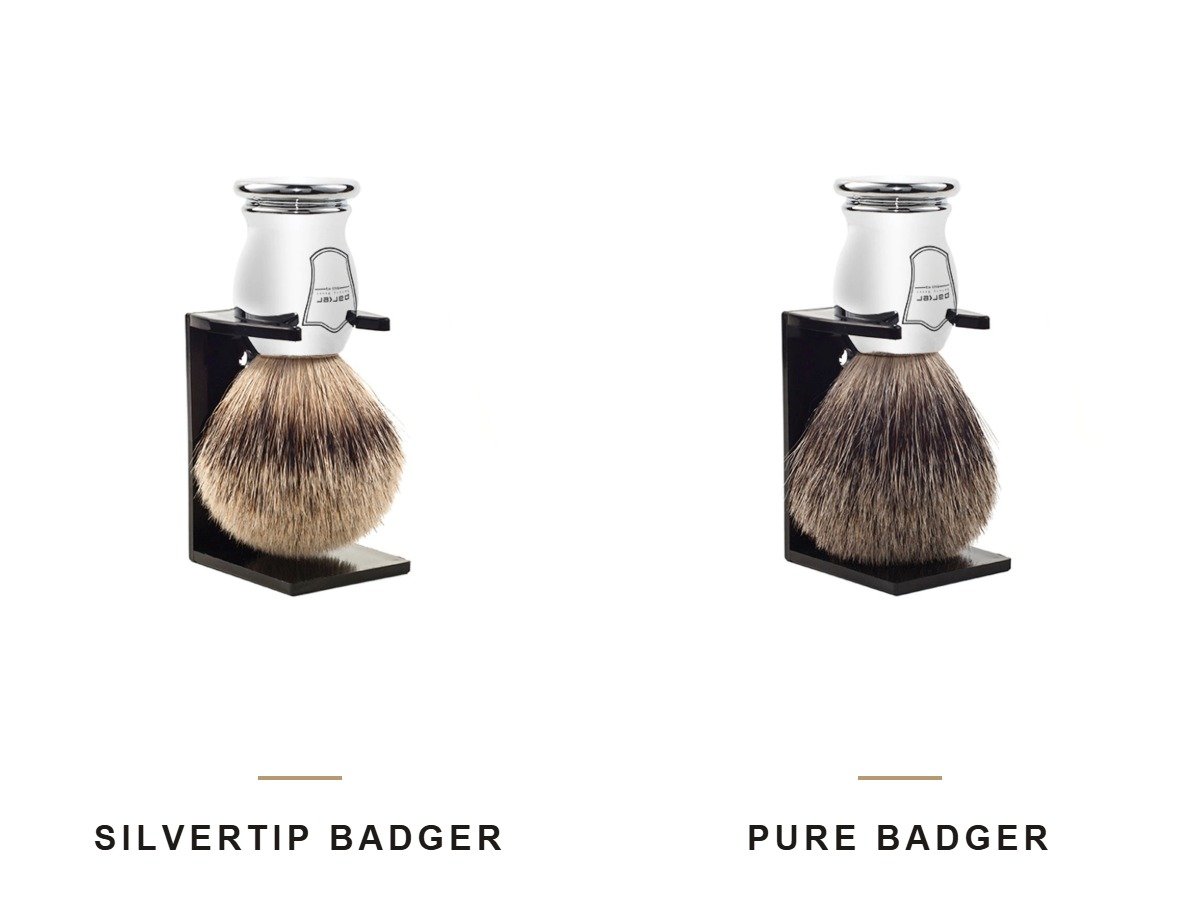
Silvertip and pure badger compared on Parker’s own published figures, using matched Parker pairs where the hair is the only difference.