
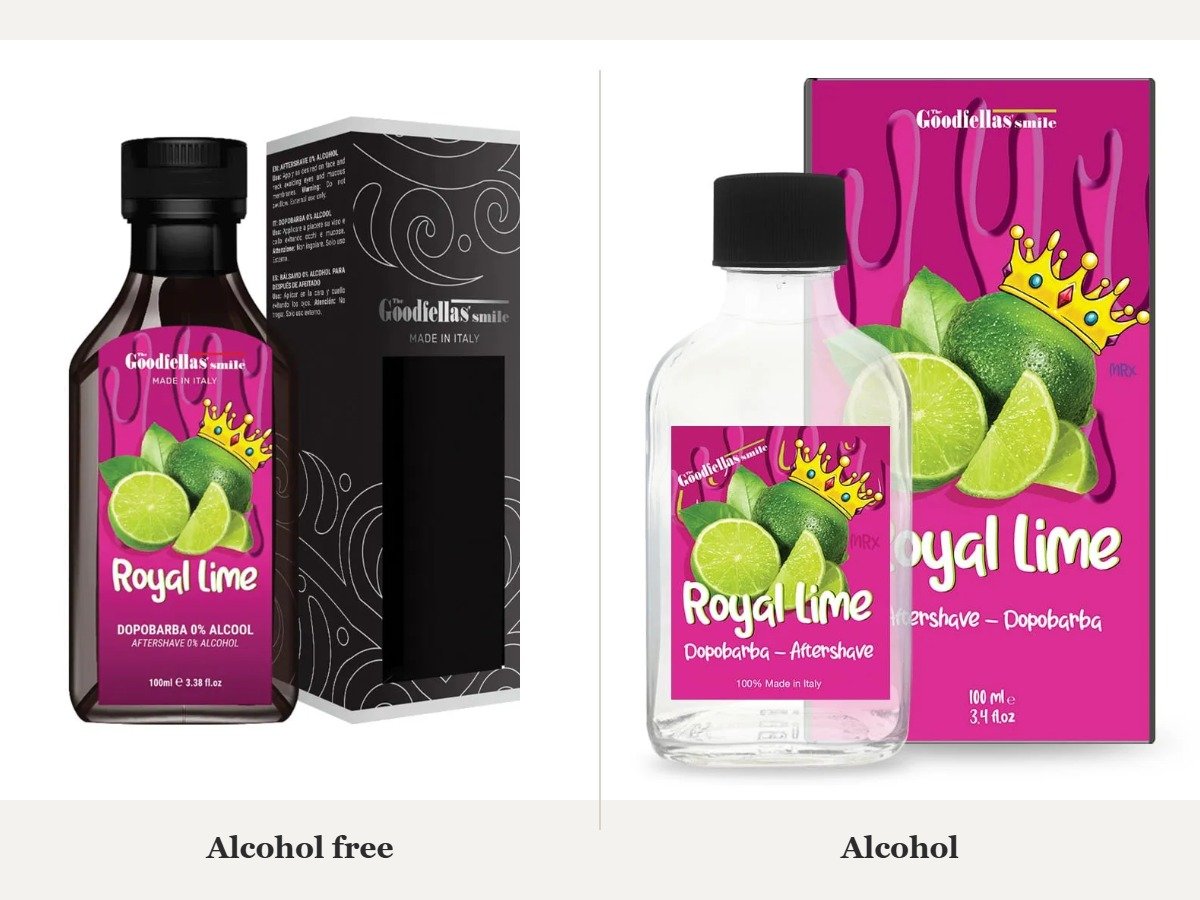
Alcohol vs Alcohol-Free Aftershave: How to Choose
The same Goodfellas scent made both ways, plus Taconic and Cella, and how to pick the finish that suits your shave.
Plenty of wet shavers get the razor, the blade and the soap sorted and still find the second pass less comfortable than the first. That is usually where a pre-shave comes in. The two formats on the shelf are oil and gel, they are not interchangeable, and the difference between them is not marketing. It is chemistry, and it decides how your lather behaves on top of it.
Here is what each one does, how much of it you actually use, and which one suits the soap and the water you already have.
A pre-shave goes on clean, damp skin before the lather, not instead of it. The job is to leave a thin layer between the edge and the skin so the blade meets less resistance, and to give the beard a little longer in contact with warm water before the razor arrives. Everything after that stays the same: the lather, the pass order, the aftershave.
That is worth saying plainly, because a pre-shave is not a fix for a poor lather. If your lather is thin or collapsing partway through the first pass, start with how to build a proper shaving lather and, if you are on municipal water that fights you, lathering in hard water. A pre-shave under a thin lather just gives you a thin lather with an extra step in front of it.
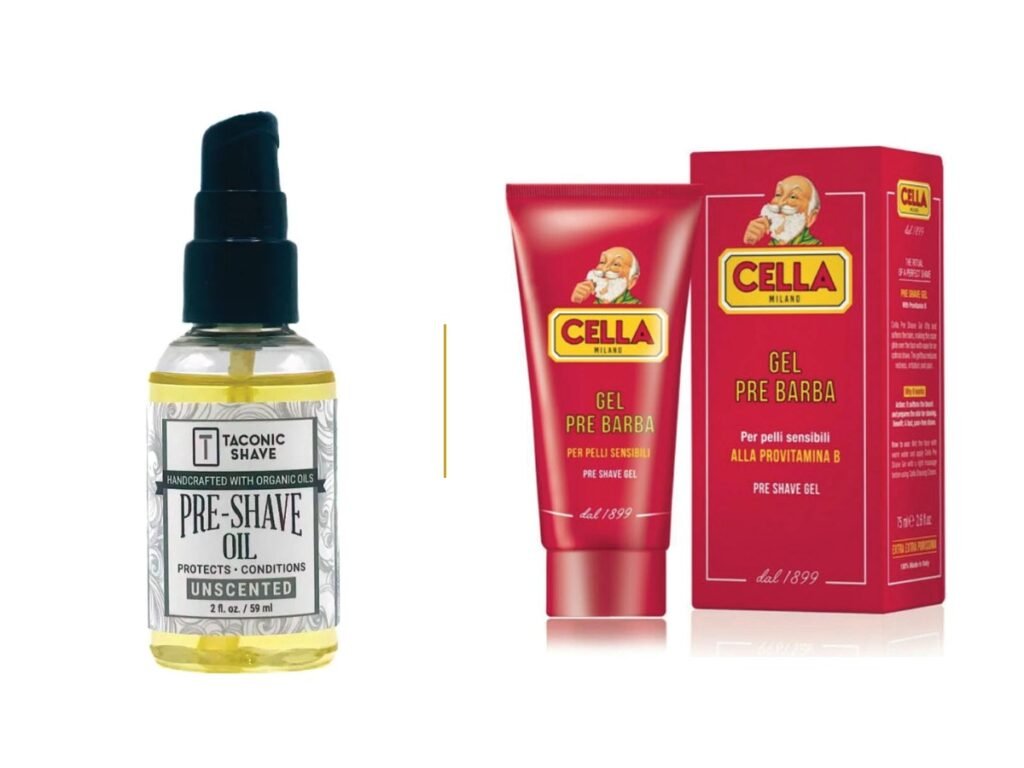
Oil pre-shaves are blends of plant oils, usually with a little fragrance and tocopherol. The Taconic Shave Unscented Organic Pre-Shave Oil publishes five ingredients and no more: organic safflower seed oil, organic castor seed oil, grape seed oil, lime oil and tocopherol. Taconic sells it as a 2 ounce bottle, and the bottle label reads 2 fl. oz. / 59 ml. Taconic’s own instruction is a single line: apply it as a first layer before the shave cream or soap.
The GROOM Shaving Oil, made in Montreal, goes the other way on the ingredient list. GROOM publishes twelve items, among them grape seed, sunflower, jojoba, hemp seed and soybean oils, with pine, cedar, juniper, star anise and copaiba carrying the scent. GROOM states the volume as 30 ml / 1 fl. oz. and describes the fragrance as pine, sage and juniper.
The point to hold on to is that oil does not dissolve in water. It stays on the hair and the skin as a film while you build lather over the top of it. That is exactly what you want from it, and it is also the catch, which is the next section.
A gel is built the opposite way. It is mostly water with thickeners, so it wets out with the lather rather than resisting it.
Cella Pre Shave Gel is the one most people meet first. Cella describes it as preparation that softens and lifts the hair and leaves a barrier on the face, and credits a formula enriched with provitamin B. Cella’s directions are specific and worth following exactly: wet the face with warm water, massage the gel in with circular movements and against the direction of growth, do not rinse it off, then put the shaving cream straight over the top. The tube sold here is 75 ml.
Cella Bio Organic Pre-Shave Gel is the same idea inside Cella’s EXTRA EXTRA BIO line, which Cella states is certified organic by AIAB/QCertificazioni. Also a 75 ml tube, and Cella’s directions are the same: warm water, light massage, then the shaving cream.
The Goodfellas’ Smile Dawn of Glory is the unscented Italian option. The maker does not publish a container size, so there is no figure to quote for it. What the maker does say is that it is deliberately odourless so it will not argue with your soap or your aftershave, and that it can be run on its own for a quick shave, which is unusual for a pre-shave and makes it the most useful of the three on a rushed morning.
Watch what happens when the lather goes on, because that is where the two formats separate.
Soap and cream work by emulsifying, which means grabbing water and air and holding them in a stable foam. Oil interferes with that. A thin film is fine and the lather sits over it without complaint. Put too much on and the lather starts to break down on the face: it goes slick and loose, loses its structure, and the second pass is worse than the first rather than better. That is almost always too much oil, not a bad oil.
A gel does not have that failure mode because it is water-based to begin with. The lather builds on top of it in the ordinary way, which is why Cella can tell you to leave it on and apply the cream directly.
So the honest summary is this. Oil gives a slicker, thinner, more noticeable glide and asks you to be disciplined about the dose. Gel is more forgiving, more predictable under lather, and less dramatic in what it changes.
If you already struggle to build a dense lather, think twice before adding oil. Hard water is working against your soap before the oil arrives, and an oil film can make an already fragile lather fall apart faster. A gel is the safer choice in that situation, or fix the lather first using the hard water approach and then decide whether you need a pre-shave at all.
The same logic applies to how you lather. If you are face lathering you are working the brush directly over whatever you put down first, so an oil layer has a bigger effect on the lather than it does when the lather is built separately in a bowl.
This is where the volumes stop being comparable. An oil is used in drops, pressed into damp skin with the fingertips and spread thin. A gel is used in a fingertip-sized amount and massaged in, the same way you would use a face wash.
So the 30 ml GROOM bottle and the 59 ml Taconic bottle are not small compared with a 75 ml gel tube. Measured against how much leaves the bottle per shave, an oil usually outlasts a gel of a similar size by a wide margin. No maker publishes a shaves-per-bottle figure and neither will we, but the mechanism is not in doubt: drops against a fingertip.
That also means the failure mode is different. Overdosing a gel wastes product. Overdosing an oil wastes product and hurts the lather.
The Taconic oil and the Goodfellas gel are both unscented, so neither interferes with the soap or the aftershave you finish with. The GROOM oil is openly scented, pine, sage and juniper, and it is applied first, so it sits underneath everything else in the shave. Both Cella gels sit in the Cella house scent family, which is why they are an easy match if you already use Cella cream.
If you are particular about your aftershave, and especially if you are choosing between an alcohol splash and an alcohol-free finish, an unscented pre-shave keeps the decision clean.
Both formats pass Canadian carry-on rules comfortably. CATSA allows containers of up to 100 ml for liquids, gels and aerosols in carry-on, all of them inside one clear resealable bag of up to 1 litre that closes properly. The 30 ml GROOM bottle, the 59 ml Taconic bottle and the 75 ml Cella tubes are all inside that limit, and the 30 ml bottle takes up the least room in the bag.
If the razor is travelling too, the rules for that are different and stricter. We covered them in flying with a safety razor in Canada.
Choose a gel if you want the lower-risk option, if your water is hard, if you already use a Cella cream, or if you would rather not think about dosing. Start with the Cella gel, or the Goodfellas Dawn of Glory if you want it unscented and want the option of shaving with it alone on a rushed morning.
Choose an oil if you want the most noticeable change in glide, if you have a coarse beard, if you go against the grain on a later pass, or if you shave in dry winter air. Start with the Taconic unscented oil if you want it to disappear under your soap, or the GROOM oil if you want a scent and a Montreal-made bottle.
If you are still building the rest of the kit, the pre-shave is not the first thing to buy. A razor, a decent blade and a soap you like come first, and soap or cream and blade choice will both change your shave more than any pre-shave will.
Rinse the face with warm water first and leave it damp, not dry and not dripping. For an oil, a few drops in the palm, rubbed between the hands, then pressed over the beard area and worked in for a few seconds. For a gel, a fingertip-sized amount massaged in against the direction of growth, and left on. Neither gets rinsed off.
Then build the lather as usual and apply it straight over the top. If the lather goes slack on the face, you used too much oil; halve it next time. If nothing much seems to change, you may simply not need one, and that is a legitimate answer too.
The full range is in the pre-shave category, and all of it ships from Montreal.
The same Goodfellas scent made both ways, plus Taconic and Cella, and how to pick the finish that suits your shave.
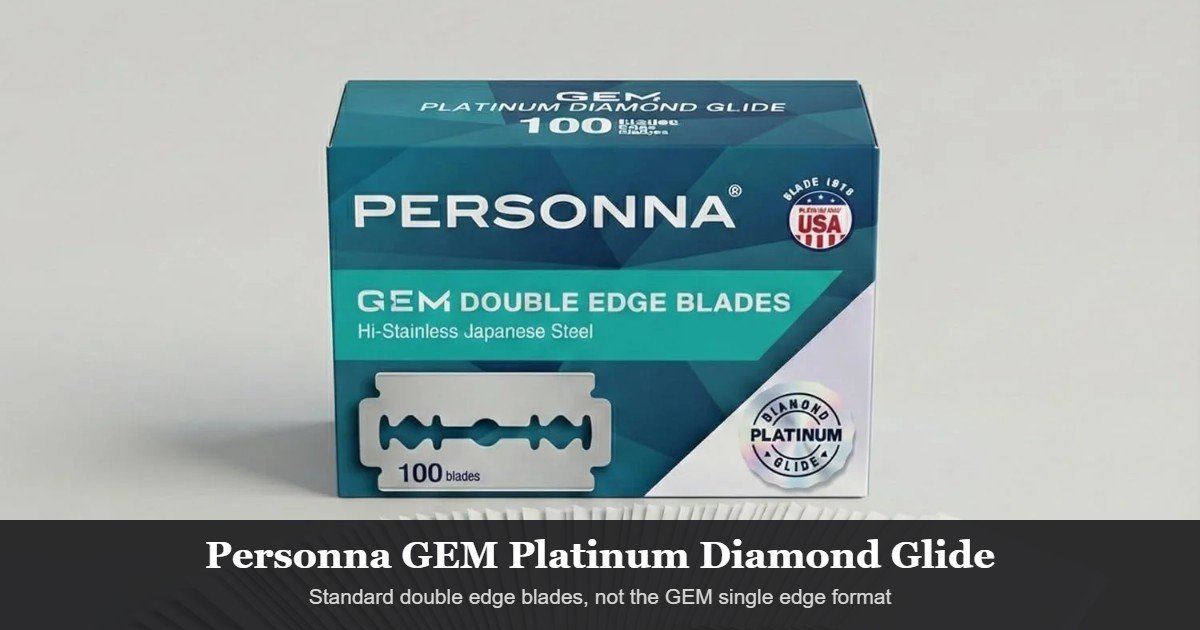
What the Personna GEM Platinum Diamond Glide actually is, what its carton says, and what wet shavers on both sides are saying.
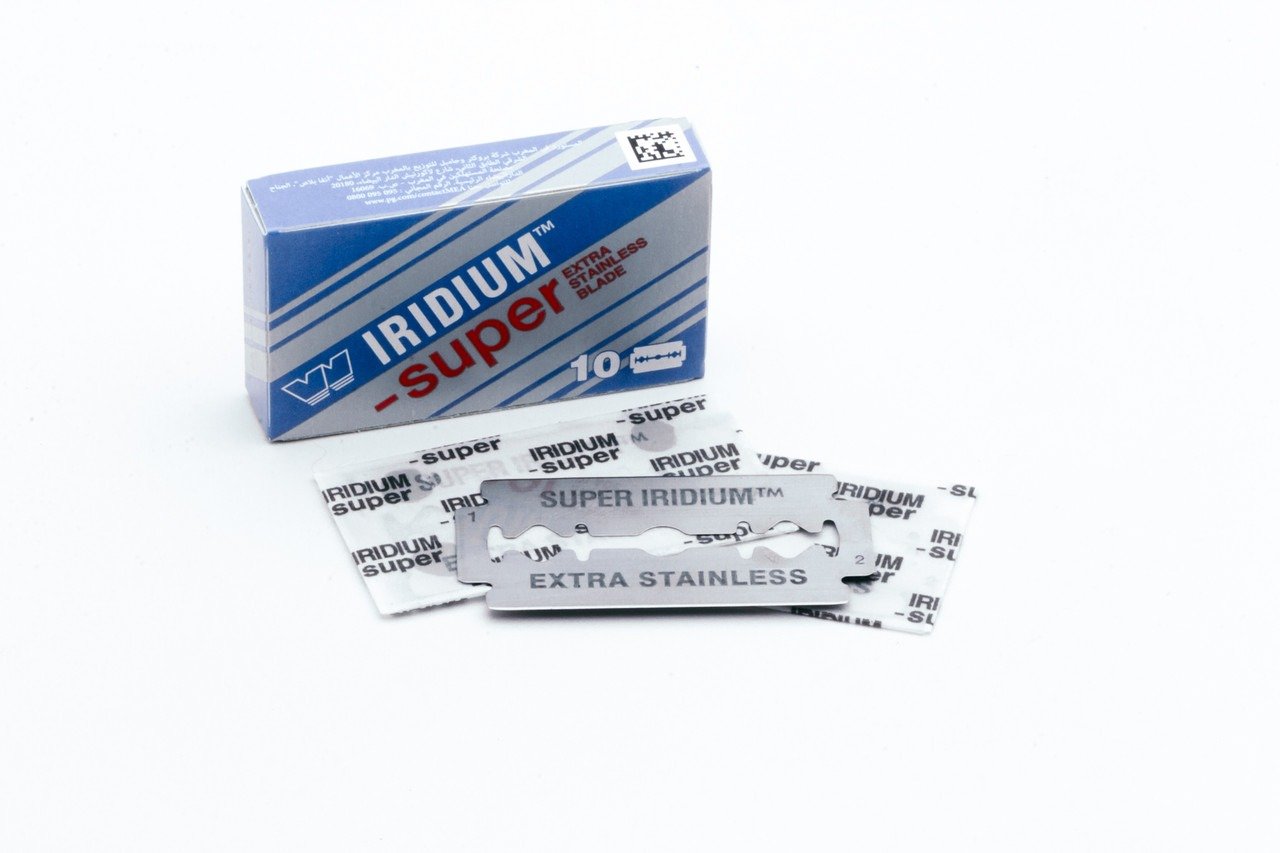
Wizamet Super Iridium has one of the most loyal followings in wet shaving. What experienced shavers actually say about it, where it is made, how it compares to Feather, Nacet and Astra, and why not everyone agrees.