
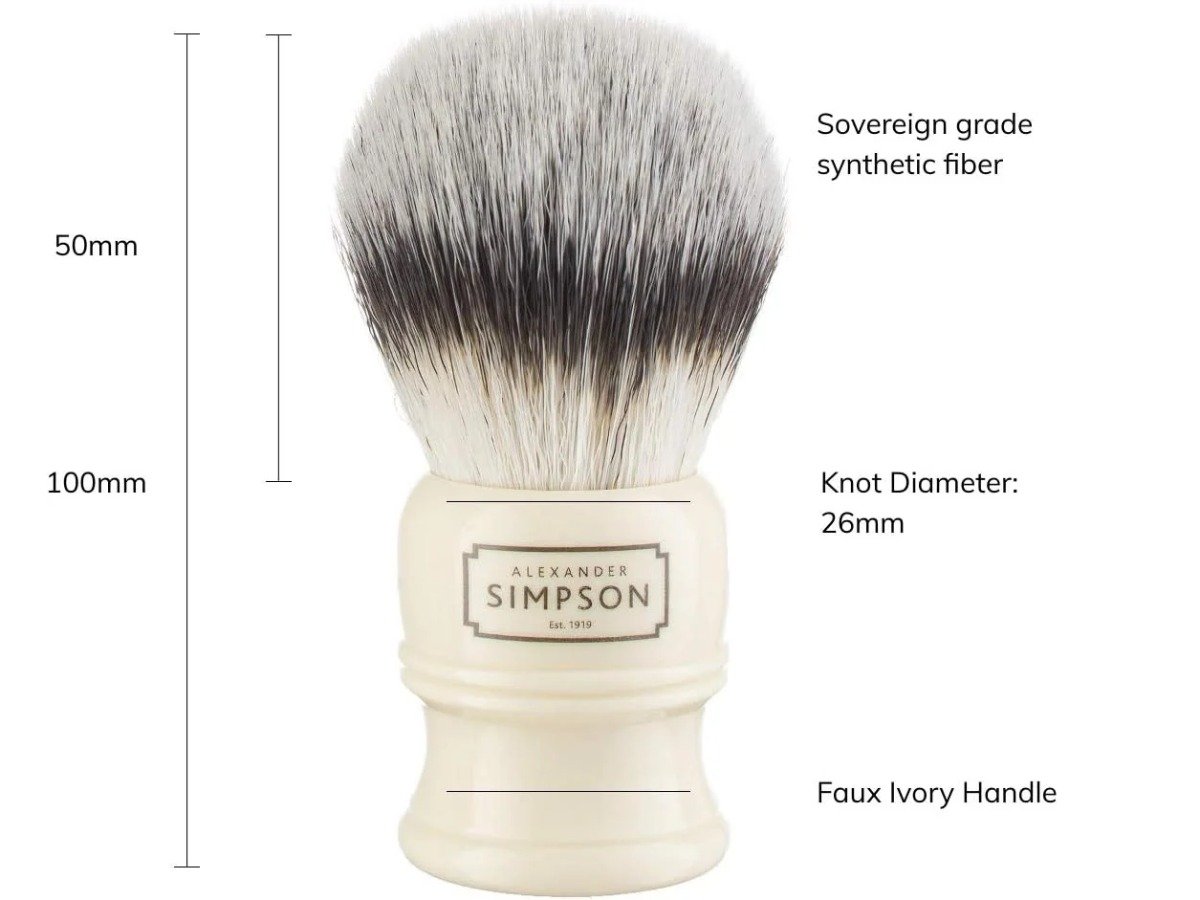
Shaving Brush Knot Size and Loft: How to Choose
What knot size and loft actually change, using figures Simpsons and Parker publish themselves, and how to measure a brush you already own.
Short answer: the idea of putting a guard in front of a razor blade goes back to the 1760s, the Kampfe brothers patented their “Safety-Razor” in 1880, and the double edge safety razor with throwaway blades that most wet shavers use today was patented by King C. Gillette in 1904.
Here is how it got from one to the other.
| Year | Milestone |
|---|---|
| c. 1762 | French cutler Jean-Jacques Perret fits a guard to a straight razor |
| 1847 | William Henson patents a hoe-shaped razor with a comb guard |
| 1880 | Frederick and Otto Kampfe receive US patent 228,904 for a “Safety-Razor”, sold as the Star |
| 1901 | Gillette files his patent for a razor using thin, disposable double edge blades |
| 1904 | Gillette’s patent, US 775,134, is issued on November 15 |
| 1906 | Single edge rib-back blades appear (American Safety Razor Company) |
| 1918 | US servicemen are issued Gillette shaving kits |
| 1934 | Gillette introduces the twist-to-open (butterfly) mechanism |
| 1955 | Gillette produces its first adjustable razor |
| 1971 | Gillette Trac II, the first twin blade cartridge, starts the cartridge era |
People have been removing facial hair for thousands of years, with sharpened shells, flint, and later bronze and iron blades. For most of that history the tool was an open blade: sharp, effective, and very easy to cut yourself with. Shaving was often left to barbers for exactly that reason.
The straight razor, a folding steel blade with a handle, became the standard tool in Europe in the 18th and 19th centuries. It still works beautifully, but it needs regular stropping and honing, and it takes practice to use without nicks. Every invention that follows is an attempt to keep the close shave of a straight razor while making it safer and simpler.
Jean-Jacques Perret, a French master cutler, is credited with fitting a guard to a straight razor around 1762, so that only a small strip of the edge could touch the skin. He also wrote one of the first books on shaving yourself, “La Pogonotomie”. His razor was still a forged, reusable blade, but the principle of a guard controlling how much edge meets the face is the same principle every safety razor uses today.
In England, William Samuel Henson, better known as an aviation pioneer for his “Aerial Steam Carriage” design, patented a razor in 1847 with the blade set at right angles to the handle, shaped like a garden hoe, with a comb-tooth guard in front. That T shape is the layout of almost every safety razor made since.
Frederick and Otto Kampfe were cutlers who had emigrated from Germany to New York. In May 1880 they applied for a patent titled simply “Safety-Razor”, and US patent 228,904 was issued on June 15, 1880. Their razors were sold under the Star name.
The Star used a short, thick, wedge-shaped blade held in a frame with a guard. It was safer than a straight razor, but the blade still had to be stropped and periodically re-honed, so it was only part of the solution. The Kampfe business later merged into the American Safety Razor company, which went on to add the Personna blade brand.
King Camp Gillette, a travelling salesman, had the idea around 1895 of a razor blade so cheap that you would throw it away when it went dull instead of sharpening it. The hard part was the blade itself: nobody was making thin, hardened sheet steel that could hold an edge. Gillette worked with William Nickerson, an MIT-trained engineer, to develop the steel and the machines to grind it.
Gillette filed his patent on December 3, 1901, and US patent 775,134 was issued on November 15, 1904. The design is the one you still see on a three piece razor today: a thin blade sharpened on both sides, clamped between a cap and a base plate with a guard, so you can use one edge and then turn the razor over to use the other.
Sales started slowly. Gillette’s first year of production saw 51 razors and 168 blades sold. The following year it was over 90,000 razors and more than 120,000 blades. The idea of a cheap handle and a steady supply of replacement blades went on to shape the whole industry, and the same standard blade size is still used today, which is why one razor can take double edge blades from dozens of different makers.
The biggest push came during the First World War. From 1918 the US military issued Gillette shaving kits to servicemen, and that year Gillette supplied 3.5 million razors and 32 million blades. Millions of men came home used to shaving with a safety razor, and the straight razor quickly became a barber’s tool.
Double edge razors were not the only path. In the United States, Gem and Ever-Ready made single edge safety razors that used a stiffer blade with a folded metal spine along one side. The two companies merged in 1906 as the American Safety Razor Company, introduced the single edge rib-back blade the same year, and joined with the Kampfe brothers’ Star business in 1919.
Jacob Schick took a different route. His Magazine Repeating Razor Company, founded in 1926, sold razors that loaded narrow single edge blades from a cartridge, so you could change blades without touching an edge. This became the Schick Injector, made in many versions from the 1930s until the early 2000s.
If you are curious how these blade types compare today, see our guide to half DE, single edge and injector blades and the single edge and shavette blade section.
Once the blade itself was settled, razor makers focused on convenience and control.
In 1934 Gillette introduced the twist-to-open mechanism, where turning the knob at the bottom of the handle opens two “doors” on the head so you can drop a blade in without taking the razor apart. These are now known as butterfly or TTO razors. Our butterfly vs three piece guide explains the practical differences, and you can browse butterfly razors here.
In 1955 Gillette produced its first adjustable razor, with a dial on the handle that changes how far the blade sits from the guard, letting one razor go from mild to more aggressive. The trade-offs are covered in adjustable vs fixed safety razors, and current models are in our adjustable safety razors category.
In 1971 Gillette launched the Trac II, the first twin blade cartridge razor, and for the next few decades cartridges and disposables took over the shelves. Double edge razors never disappeared, though, and manufacturers in Japan, Germany, India, Turkey, Russia, Egypt and elsewhere kept making blades for them.
In recent years many shavers have come back to double edge razors, mainly for the lower cost per shave, the wide choice of blades, and the fact that a well made razor handle can last decades. Today you can choose between three piece razors, butterfly razors, adjustable razors and closed or open comb heads. Our open comb vs closed comb guide explains the head styles.
The straight razor has had a revival of its own in barbershops, where shavettes, straight razors that take a replaceable half DE blade, are now widely used because a fresh blade for each client is more hygienic. See our barber razors and shavettes.
If you are new to safety razors, our guide on how to choose your first safety razor walks through head type, weight and handle length, and the double edge safety razors category shows what we have in stock. A good brush makes a real difference to lather, so it is worth a look at our shaving brushes too.
Everything in this guide, in stock and shipping from Montreal:
New to all of this? Our current buying guide is how to choose your first safety razor.
What knot size and loft actually change, using figures Simpsons and Parker publish themselves, and how to measure a brush you already own.
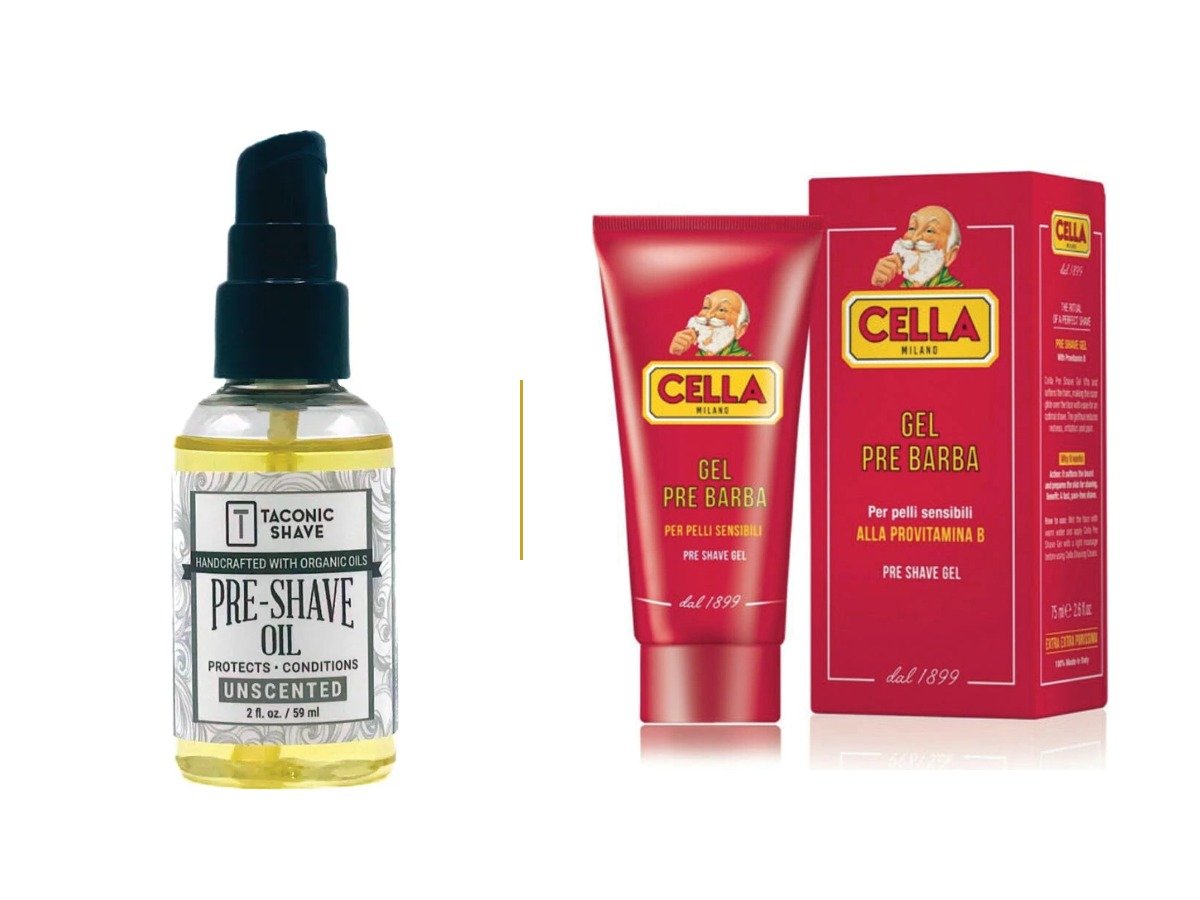
Pre-shave oil and pre-shave gel behave differently under lather. What each one does, how much you use, and which suits your soap and your water.
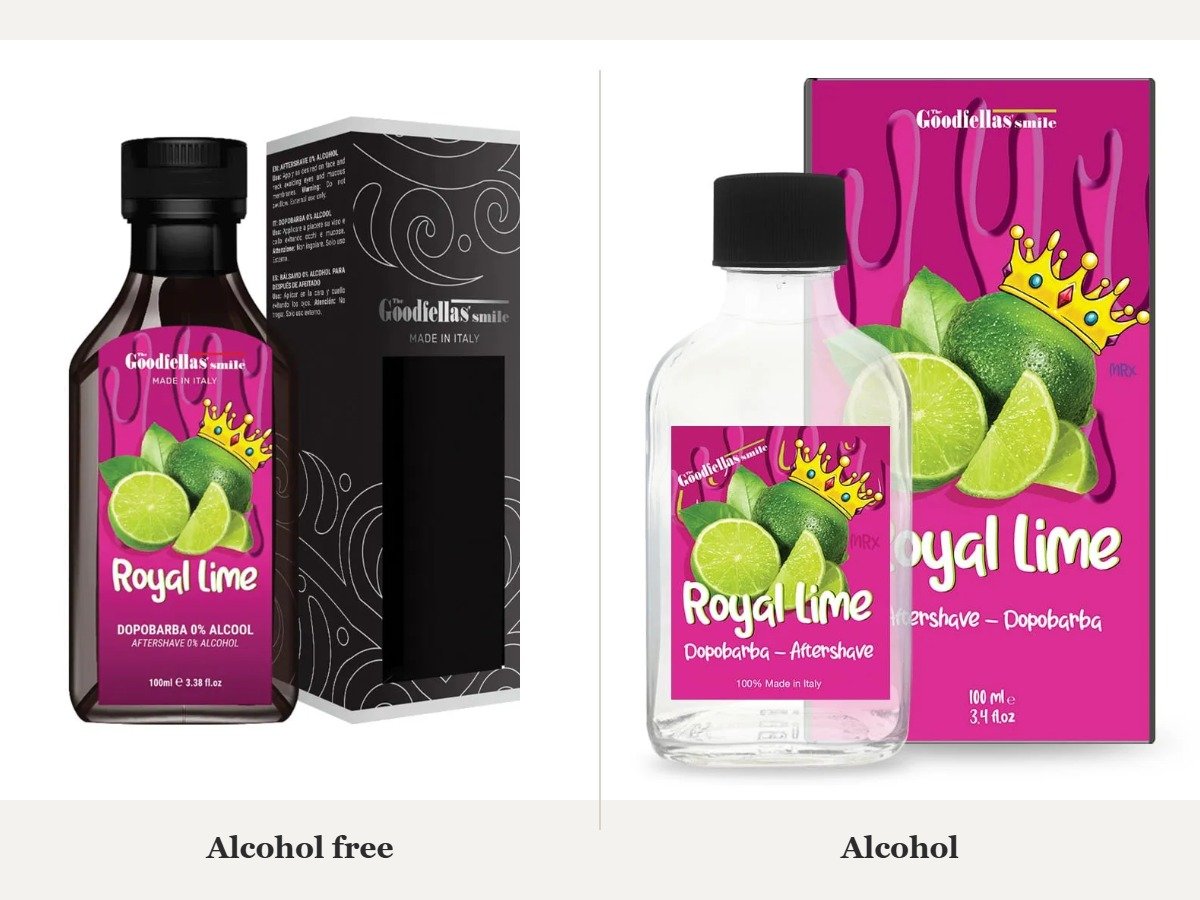
The same Goodfellas scent made both ways, plus Taconic and Cella, and how to pick the finish that suits your shave.