
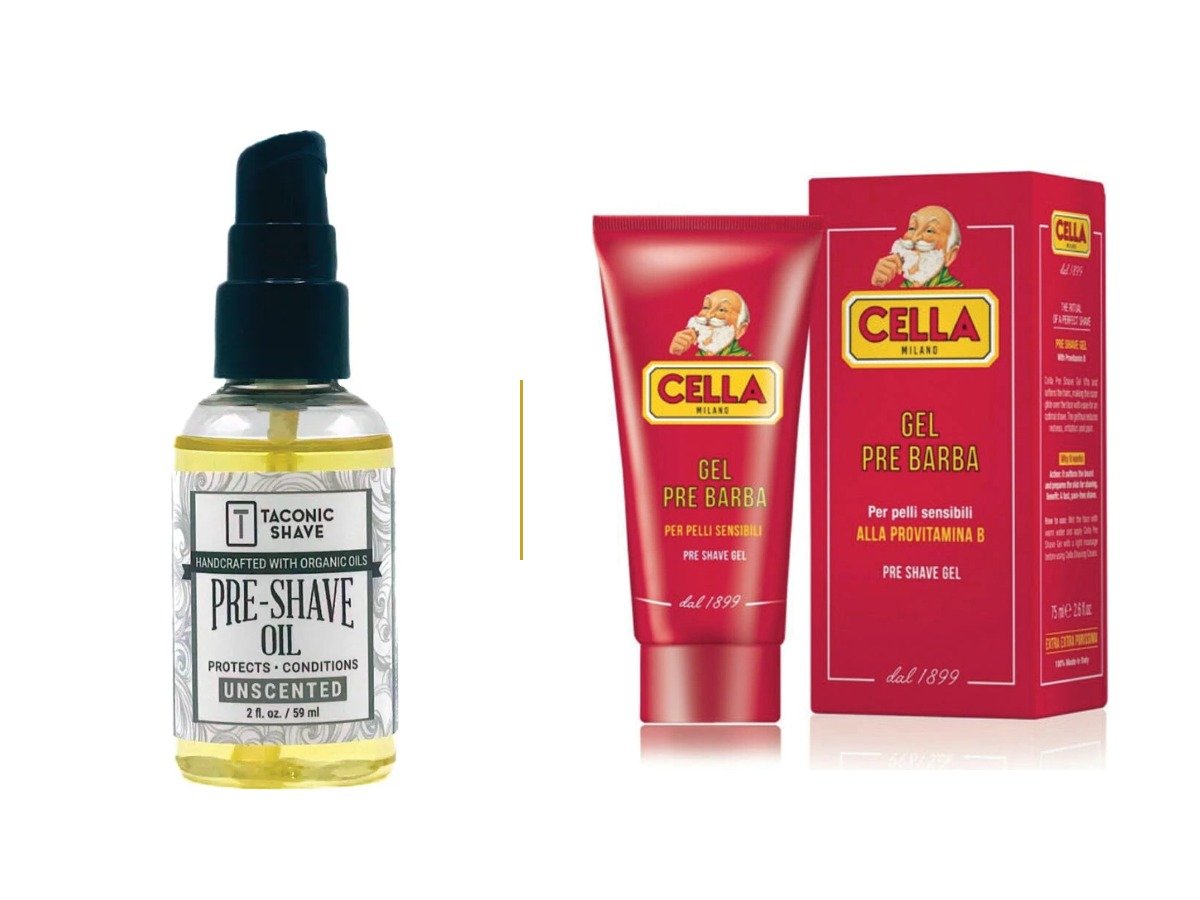
Pre-Shave Oil vs Gel: Which One Belongs in Your Routine
Pre-shave oil and pre-shave gel behave differently under lather. What each one does, how much you use, and which suits your soap and your water.
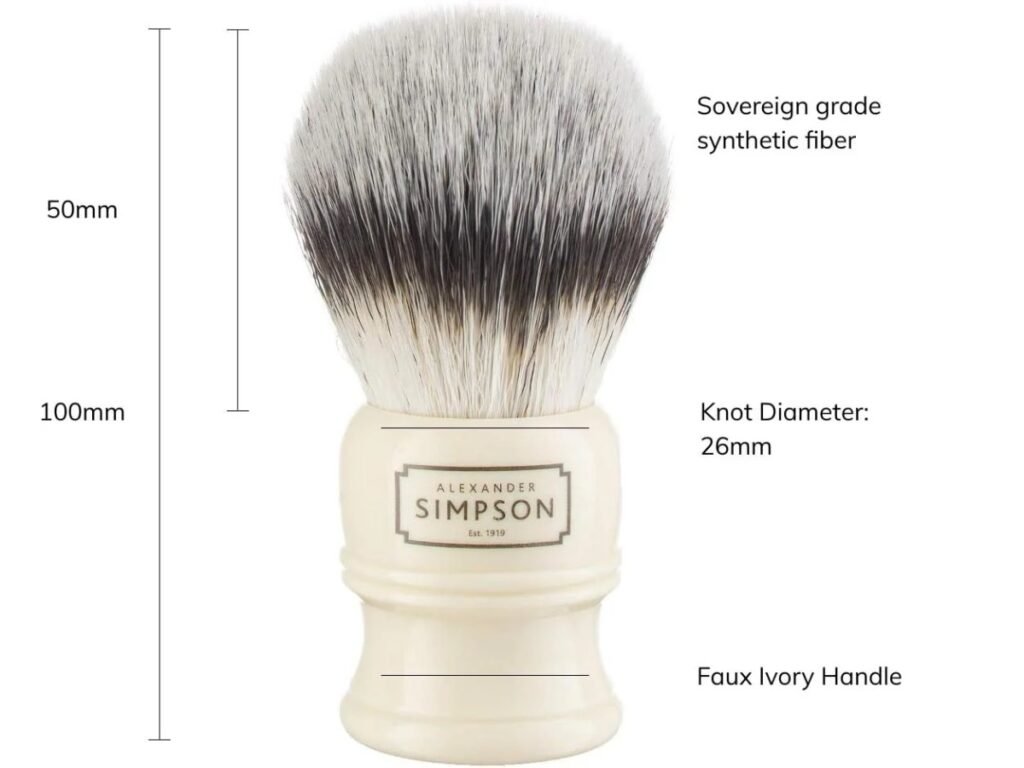
Nearly every shaving brush listing gives you a knot size in millimetres. Far fewer give you a loft. That matters, because shaving brush knot size on its own does not tell you how a brush will feel. Loft, the height of hair standing proud of the handle, changes the feel at least as much, and the two numbers only make sense together.
Everything below comes from figures the makers publish themselves. Where a maker does not publish a number, this article says so rather than filling the gap with a guess.
Knot size, or knot diameter, is the width of the bundle of hair at the point where it leaves the handle. It is the number you see in almost every product title: 20 mm, 24 mm, 26 mm.
Loft is the height of that bundle above the handle, measured from where the hair emerges to the tip. A brush can have a wide knot and a short loft, or a narrow knot and a tall one. Those two brushes feel nothing alike, even though a listing that quotes only knot size would make them look like near neighbours.
There is a third figure worth noting: handle height. Add handle height to loft and you get the overall height of the brush.
Overall height minus handle height equals loft. That holds exactly across the Simpsons range, which publishes all three numbers. The Trafalgar T1 is listed at 82 mm overall on a 40 mm handle, and its published loft is 42 mm. The T3 is 100 mm overall on a 50 mm handle, and its published loft is 50 mm.
This is useful because several makers publish overall height and handle height but no loft at all. If you have those two figures, you can work out roughly what the third one is.
A wider knot holds more water and more lather, so it loads more soap in one go and can carry enough for a full shave without reloading. It also covers more of the face per stroke, which makes a big knot quicker but less precise around the nose and under the jaw.
The trade is control. A 26 mm or 27 mm knot is a lot of brush to steer into the hollow under your nostril. Many shavers find somewhere around 20 mm to 24 mm the easier size to live with day to day, and the shaving brush range is deepest in exactly that band.
Loft controls backbone, which is the resistance you feel when you press the brush into your face. Hair of a given stiffness bends more easily the further it stands from its anchor point, so a taller loft on the same hair gives a softer, floppier feel, and a shorter loft gives a firmer one that pushes lather down into the stubble.
That is why two brushes with the same hair grade can feel so different. It is also why a brush that feels too soft is not necessarily the wrong hair. It may simply be set tall.
Divide loft by knot diameter and you get a single figure describing the shape of the brush. A low ratio is a squat, firm knot. A high ratio is a tall, yielding one.
Run that on the Simpsons figures and a pattern appears:
| Brush | Knot | Loft | Handle | Overall | Loft ÷ knot |
|---|---|---|---|---|---|
| Trafalgar T1 | 23 mm | 42 mm | 40 mm | 82 mm | 1.83 |
| Trafalgar T2 | 24 mm | 44 mm | 46 mm | 90 mm | 1.83 |
| Trafalgar T3 | 26 mm | 50 mm | 50 mm | 100 mm | 1.92 |
| Chubby 2 | 27 mm | 50 mm | 44 mm | 94 mm | 1.85 |
All four sit between 1.83 and 1.92. Simpsons is holding the proportions close to constant and changing the scale, which is why the Trafalgars feel like one another at different sizes rather than like four unrelated brushes.
The Chubby 2 is the interesting one. It carries the widest knot in the table, 27 mm, on the same 50 mm loft as the T3, and does it on a handle 6 mm shorter. More hair across the same height is a stubbier shape, and a shorter handle puts your fingers closer to the base of the knot. That is the whole Chubby character, visible in four published numbers.
Simpsons lists knot diameter, knot loft, handle height and overall height on its product pages, and labels them as approximate. That is more disclosure than most of the trade offers, and it makes the Trafalgar series a genuinely useful ladder to shop by.
The Trafalgar T1 at 23 mm and 82 mm overall is compact enough to pack. The Trafalgar T2 at 24 mm is the middle size, and for many shavers the one that disappears into the routine. The Trafalgar T3 at 26 mm and 100 mm overall is the full size brush of the three. Same design, same proportions, three scales.
Parker publishes knot diameter on every brush page and describes loft in words rather than millimetres. The phrase on its pages is “long loft bristles for extra lathering ability”, which tells you the intent but not the measurement.
Across the Parker brushes stocked here, Parker’s own site gives 20 mm for the chrome handle pure badger, 21 mm for the gray and rose gold silvertip, 22 mm for the black handle silvertip, and 23 mm for the oversized pure badger on the marbled hunter green handle. In stock terms that is the 20 mm chrome pure badger, the 21 mm gray and rose gold silvertip, the 22 mm black handle silvertip and the 23 mm hunter green pure badger.
On one of those pages Parker does publish the other dimensions. The gray and rose gold silvertip is listed with a handle length of 3.0 in and an overall height of 5 in. Run the arithmetic from the previous section and roughly 2 in, about 50 mm, is standing above the handle. On a 21 mm knot that works out near 2.4, which would be taller in proportion than anything in the Simpsons table and is consistent with Parker’s own “long loft” wording. Treat it as an estimate rather than a specification: Parker rounds those figures to a tenth of an inch and does not publish a loft.
If you are weighing grades rather than sizes, silvertip vs pure badger covers that decision on Parker’s own figures, using a matched pair where the handle and the knot size are identical and only the hair changes.
Omega’s own product page for the 10048, the brush the trade calls the Pro 48, lists the item number, the chromed ABS handle and the packaging. It gives no knot diameter, no loft and no overall height, offers size only as a broad filter band, and carries the note that dimensions may slightly differ from those indicated.
This is worth knowing in general. When you see a precise millimetre figure quoted for an Omega brush, it has usually come from a retailer or a reviewer with a ruler rather than from Omega. That does not make it wrong, but it is not the maker speaking, and figures from that route vary between sources. The Omega Pro 48 remains a lot of brush for the money; it just is not a brush you can shop by published numbers.
If you build lather in a bowl, a wider knot and a moderate loft suit the job, because you want volume and enough backbone to work the soap against the side of the vessel. If you lather on your face, a slightly narrower knot gives you more control where the brush meets skin, and a taller loft spreads rather than scrubs.
That decision is worth making before the brush decision, and bowl lathering vs face lathering works through it. If you are going the bowl route, choosing a lathering bowl or scuttle covers the vessel itself.
Large hands and a wide face carry a big brush comfortably. Smaller hands, or a lot of detail work around a moustache or under the jaw, tend to favour something in the low twenties with a shorter handle.
Handle height is the figure most people ignore and then notice every single day. A 40 mm handle, like the T1, puts your fingers right at the base of the hair. A 50 mm handle, like the T3, gives you somewhere to hold that is not the knot. Neither is better; they are different grips.
For a first brush, or a replacement that should simply work, something between 20 mm and 24 mm with a middling loft is the safe middle of the market, and most of the synthetic brushes and pure badger brushes stocked here sit in that band.
If you already know you want volume and a soft hand, go wider and taller, and look at the silvertip badger options. If you want backbone, keep the loft down rather than chasing a stiffer hair grade.
Hair type is a separate decision from size, and how to choose a shaving brush covers boar, badger and synthetic properly. A boar brush also changes as it is used, which breaking in a boar brush explains.
You do not need anything special. Stand the brush on a flat surface against a ruler and read the total height, then read the height of the handle where the hair emerges. The difference is the loft. For knot diameter, measure straight across the hair at the point it leaves the handle, not across the bloom at the tip, which is always wider.
Write those three numbers down. Next time a brush suits you, or does not, you will know what shape it was, and the background on traditional shaving brushes fills in the rest.
Pre-shave oil and pre-shave gel behave differently under lather. What each one does, how much you use, and which suits your soap and your water.
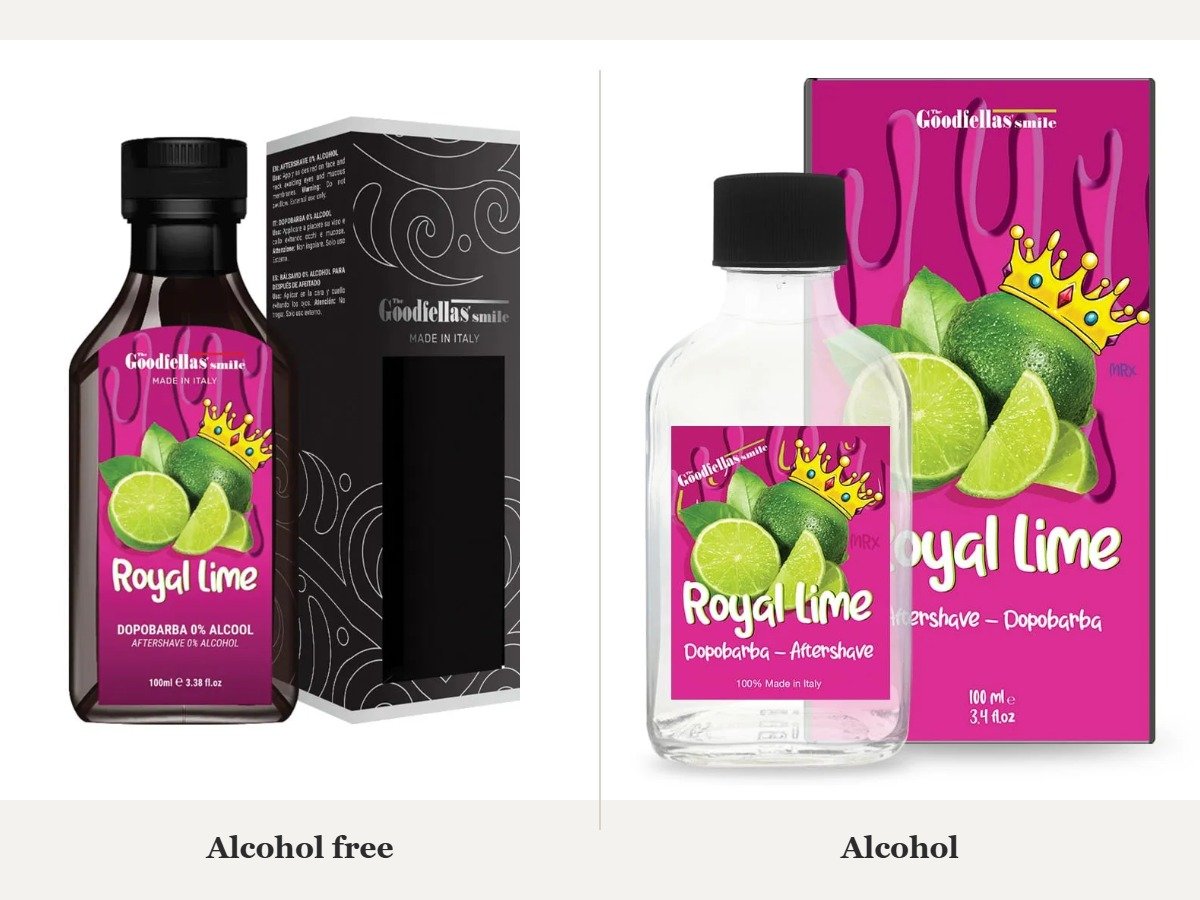
The same Goodfellas scent made both ways, plus Taconic and Cella, and how to pick the finish that suits your shave.
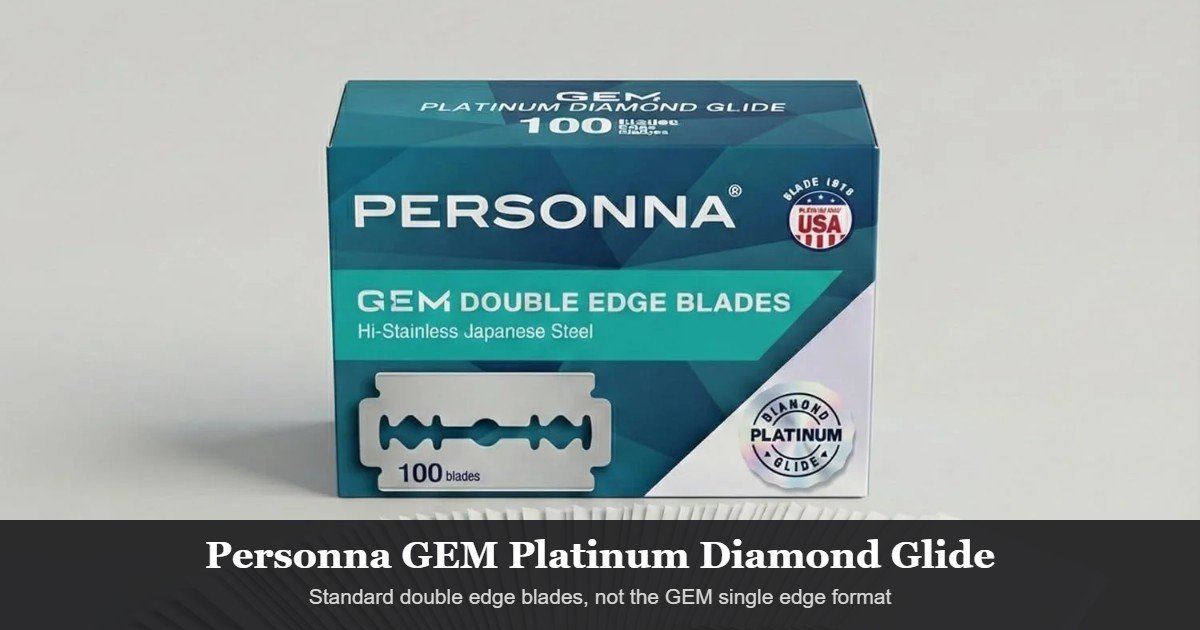
What the Personna GEM Platinum Diamond Glide actually is, what its carton says, and what wet shavers on both sides are saying.