
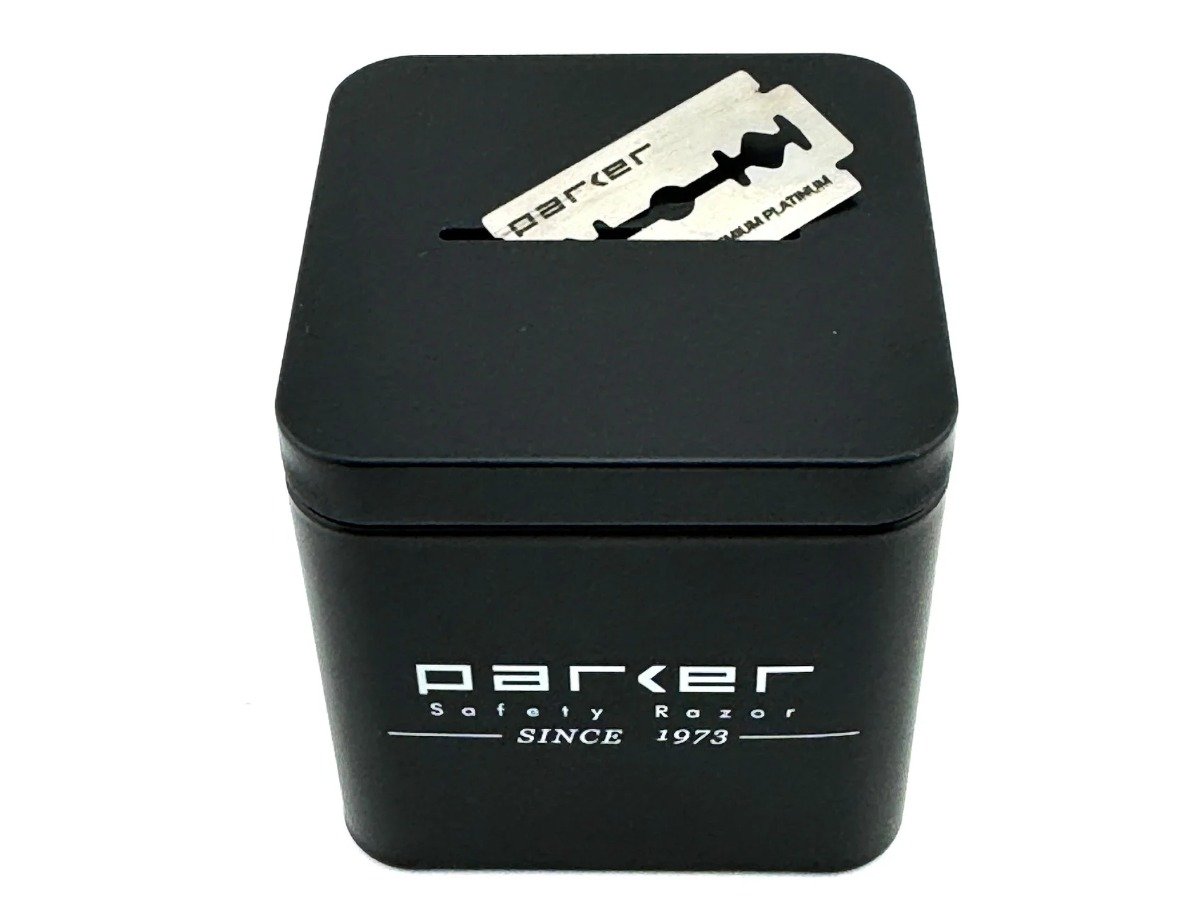
How to Dispose of Used Razor Blades Safely in Canada
A used double edge blade should never go loose into a bin or a recycling box. How a blade bank works, what the Parker 300 blade bank holds, and how to check the rule in your own municipality.
Badger is where most people end up once they have shaved with a brush for a while, and it is also where the labels get confusing. Silvertip, pure, best, black. The names sound like a quality ladder, and broadly they are, but they are not a regulated standard and no two makers have to use them the same way. What they describe is how the hair was sorted, and therefore how the finished knot behaves in your hand.
This article compares silvertip and pure badger using Parker’s own published figures, because Wish4Blades stocks the same Parker handle in both grades. That is unusual and it is useful: it lets you hold everything else still and see exactly what the money buys.
There is no governing body that certifies a knot as silvertip. The grade is the maker’s own account of how the hair was selected, so the only sound way to read a grade is against the rest of that maker’s range rather than across brands.
Parker’s own catalogue shows why that matters. The White and Chrome brush is titled and described as best badger, and it sits inside Parker’s Pure Badger category. Both things are true at once, because best badger is a sorting of pure badger hair rather than a separate material. If you compare a best badger brush from one maker against a pure badger brush from another and expect the names alone to tell you which is softer, the names will not carry that weight.
So treat a grade as a strong hint about feel, and treat the maker’s own ladder as the thing that is actually reliable.
Parker publishes a consistent order across its brush pages, and it is worth having in front of you before you spend anything.
Black badger is the stiffest of the badger grades Parker sells. Parker’s own category page for it says the grade holds large quantities of water and builds an excellent lather, and that many shavers prefer it precisely for the firmness. Parker also notes that others choose a gentler grade instead.
Pure badger sits in the middle. Parker describes it on its product pages as not as coarse as black badger, and more firm than silvertip badger
, and frames it as a compromise between stiffness and softness. That is the single most useful sentence in the whole badger conversation, because it tells you pure badger is not a budget version of silvertip. It is a different balance point.
Silvertip is the softest grade Parker offers, and the one Parker ties most directly to water retention. The silvertip pages lead on density and softness at the tips rather than on backbone.
Notice what is not in that ladder: nobody, Parker included, claims the softest grade makes the best lather. Water capacity and lather quality are credited to black badger and pure badger just as readily. Softness is a comfort property rather than a performance one.
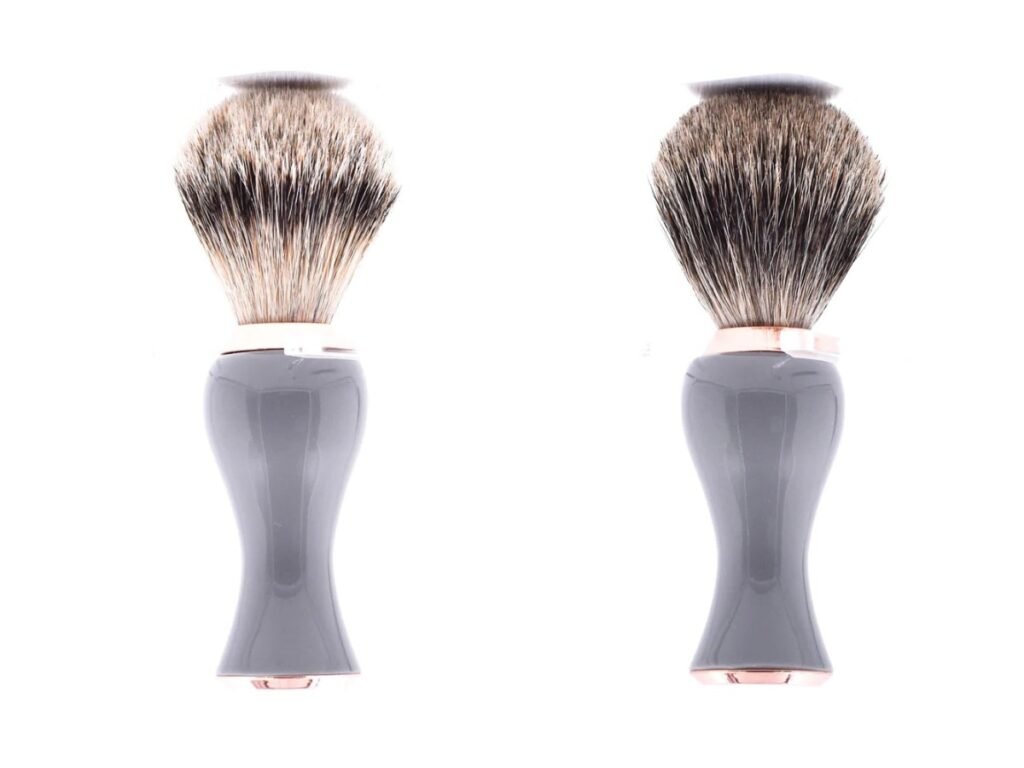
Here is where Wish4Blades can show you something a spec sheet cannot. Parker builds matched pairs, the same handle and the same knot diameter in both grades, and both sides of two of those pairs are in stock.
The Parker Gray and Rose Gold Silvertip Badger Brush and Stand and the Parker Gray and Rose Gold Pure Badger Brush and Stand are, by Parker’s published specifications, the same brush apart from the hair. Both use a heavyweight gray resin handle with rose gold accents. Parker gives that handle as 3.0 inches, with an overall brush height of 5 inches and a base diameter of 1.2 inches. Both carry a 21 mm long loft knot. Both ship with a stand in a gift box.
At the time of writing the silvertip is $72.00 and the pure badger is $42.00. Thirty dollars, and the only thing it buys is the grade of hair in the knot.
The same arrangement exists one size down. The Parker Chrome Handle Silvertip Badger Brush and Stand sets a 20 mm silvertip knot into Parker’s heavyweight chrome handle, and Parker lists it as its best selling silvertip model. The Parker Chrome Handle Pure Badger Brush and Stand puts a 20 mm pure badger knot into the same heavyweight chrome handle, and Parker describes that knot as long loft for extra lathering ability.
At the time of writing that is $85.05 against $32.49. The gap is wider here than on the gray and rose gold pair, which is a reminder to compare the specific pair in front of you rather than assuming a fixed premium for silvertip across a whole range.
Strip away the marketing and the grade changes three things you can feel.
The tips. Silvertip is sorted for soft tips, so the brush feels gentler as it passes over the face. Pure badger tips have more point to them. Many shavers read that as a pleasant scrub and some read it as prickle, and which camp you land in is genuinely personal rather than a matter of one being better made.
The backbone. Pure badger is the firmer grade by Parker’s own description, so it pushes back more when you press into a soap. That firmness is why it is often the easier brush to learn on, because it tells you what it is doing. A very soft, very dense silvertip knot can feel vague on a hard soap until you get used to loading it for longer.
How it carries water. All three badger grades hold water well, which is badger’s advantage over most other materials. Parker ties water retention most directly to silvertip and credits black badger with holding large quantities too. In practice a denser knot of any grade needs a more deliberate shake out before you start, or the first lather can come out thin.
None of that is a claim about what either brush does to your skin. It is about how the knot behaves against a soap and against your face. If you are still deciding between badger and the other materials altogether, the guide to choosing between boar, badger and synthetic is the better starting point, and the background piece on traditional shaving brushes covers where the materials came from.
Grade and knot diameter get muddled together constantly, usually because the more expensive brush in a shop happens to be both softer and bigger. They are independent choices.
A 20 mm knot, as on both chrome brushes above, is the common all round size in traditional wet shaving. It loads a soap readily and works on the face about as easily as in a bowl. A 21 mm knot, as on the gray and rose gold pair, is a small step up in capacity without changing how the brush handles. Parker’s oversized option, the Parker White and Chrome Best Badger Brush and Stand, runs a 23 mm extra dense knot and is the one to look at if you lather in a bowl and want to build a larger volume in one go.
If you want a bigger brush, change the millimetres. If you want a softer brush, change the grade. Changing both at once and then deciding you dislike silvertip is how people end up blaming the wrong variable.
On the evidence above rather than on sentiment:
Pure badger suits you if this is your first badger brush, if you lather mostly on the face, if you use firm or triple milled soaps and want the brush to tell you when it has loaded, or if you would rather put the difference into soap. Browse the pure badger brushes.
Silvertip suits you if you already know you prefer a soft tip, if you bowl lather and enjoy a dense knot, or if the brush is a gift and the feel in the hand is part of the point. Browse the silvertip badger brushes.
Black badger suits you if you actively want the stiffest badger option and have found softer knots too yielding. Browse the black badger brushes, or see the full range of shaving brushes.
One honest note. If your lather has been disappointing, the grade of your brush is rarely the reason. Water hardness, how long you load and how much water you add afterwards all do more. Building a better lather and the difference between soap and cream will move the needle further than thirty dollars of hair will.
Badger of any grade can last for years when it is treated simply. Rinse the knot thoroughly after the shave until the water runs clear, squeeze gently rather than wringing, shake the bulk of the water out and leave it to dry with the bristles facing down or sideways so water is not sitting in the glue at the base. The stand that comes with every Parker brush above is doing that job, not decorating the shelf.
A new badger brush may shed a few hairs over its first several uses, which is normal settling rather than a fault, and it is a much milder affair than the break in a boar brush goes through. If you want the contrast, breaking in a boar brush covers that. Where you lather matters too, and choosing a bowl or scuttle and bowl lathering against face lathering both bear on which knot size and grade will suit you.
Silvertip is Parker’s softest badger grade and the one it ties most directly to water retention. Pure badger is firmer, and Parker positions it as the balance point between the coarse and the soft rather than as the cheaper option. On matched Parker pairs the hair is the only difference, and at the time of writing that difference is $30.00 on the 21 mm gray and rose gold pair. Neither grade makes a better lather on its own. Buy the firmness you want to feel, pick the knot size separately, and spend what is left on a soap you like.
Every Parker specification quoted here comes from parkershaving.com. Prices are current at the date of publication and all orders ship from Montreal.
A used double edge blade should never go loose into a bin or a recycling box. How a blade bank works, what the Parker 300 blade bank holds, and how to check the rule in your own municipality.
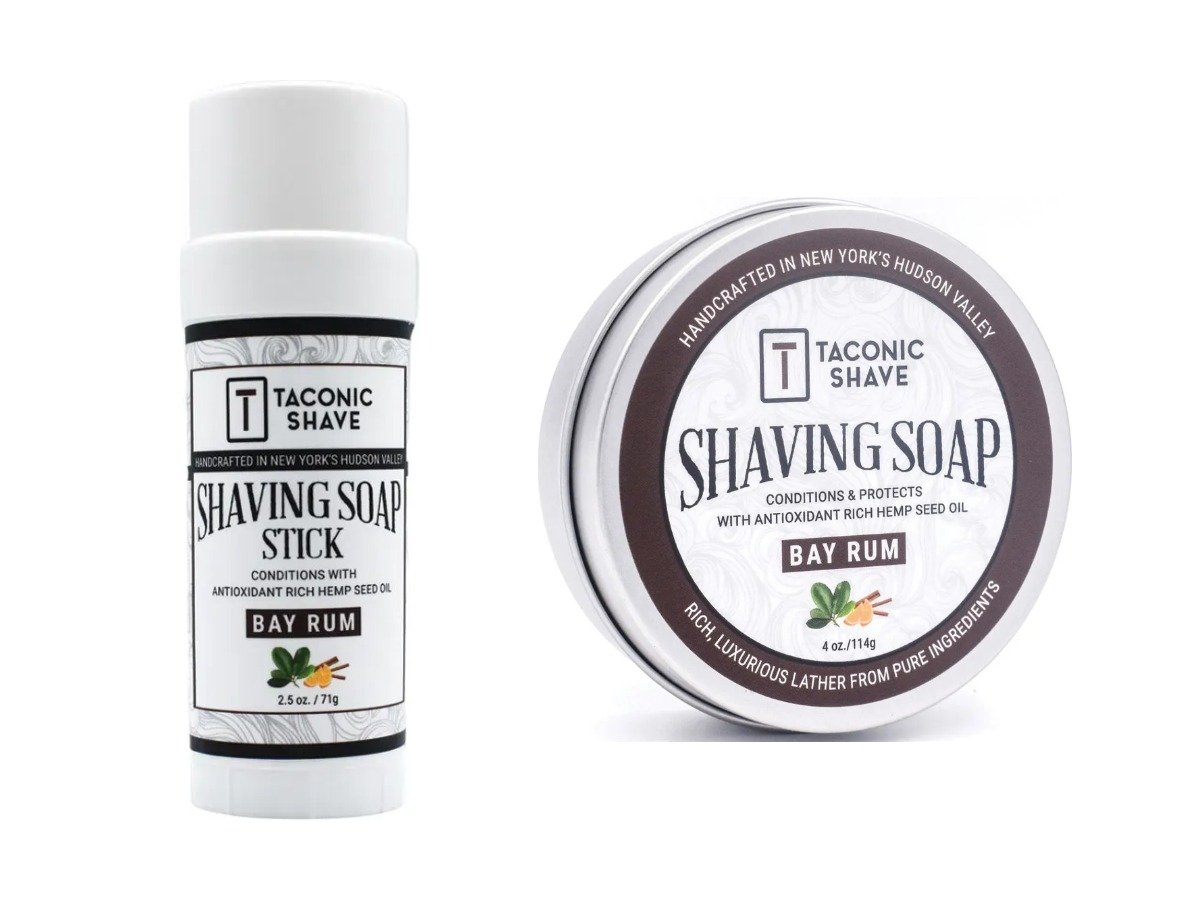
A shave stick and a tub of shaving soap can hold the same soap. What changes is size, lathering method, travel and choice.
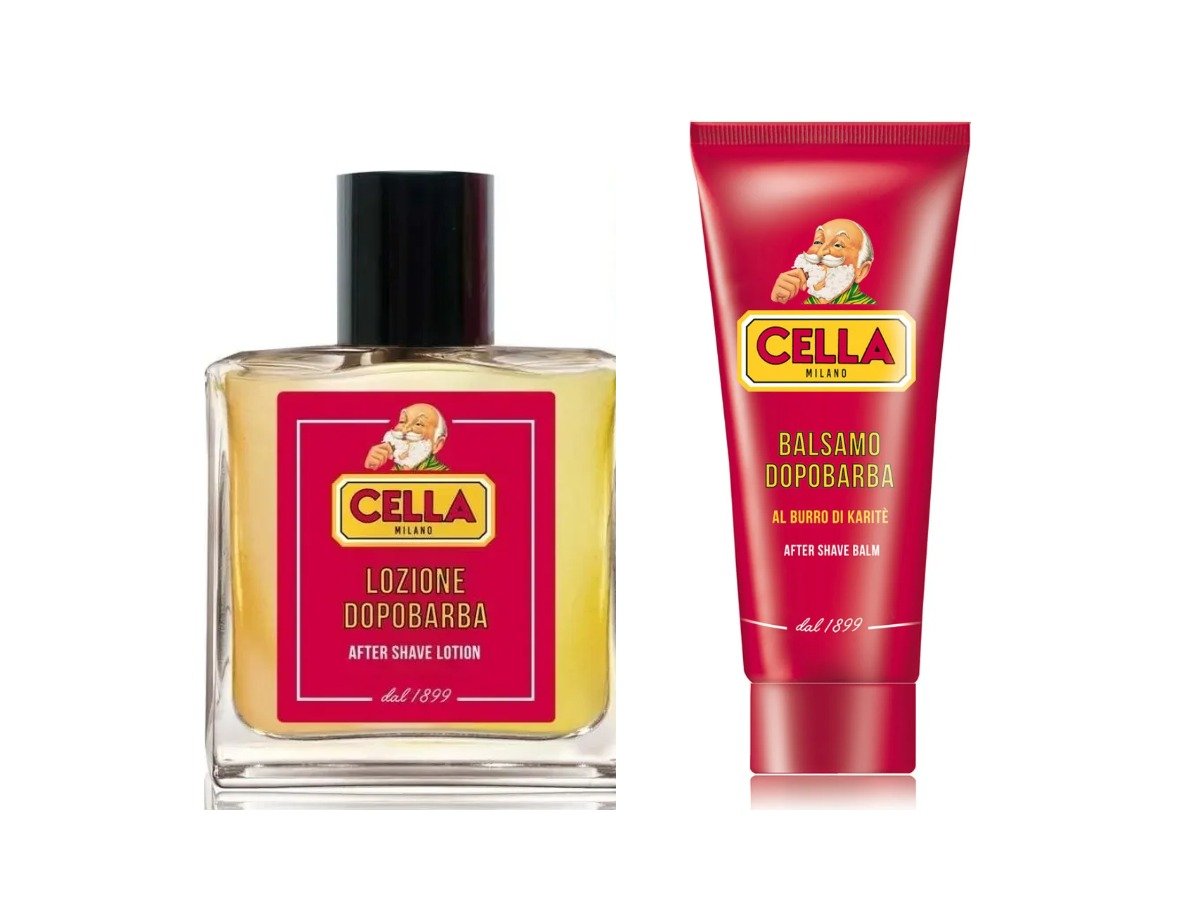
A splash is alcohol and evaporates in under a minute. A balm has none and stays. How the two differ, and when each one suits.