
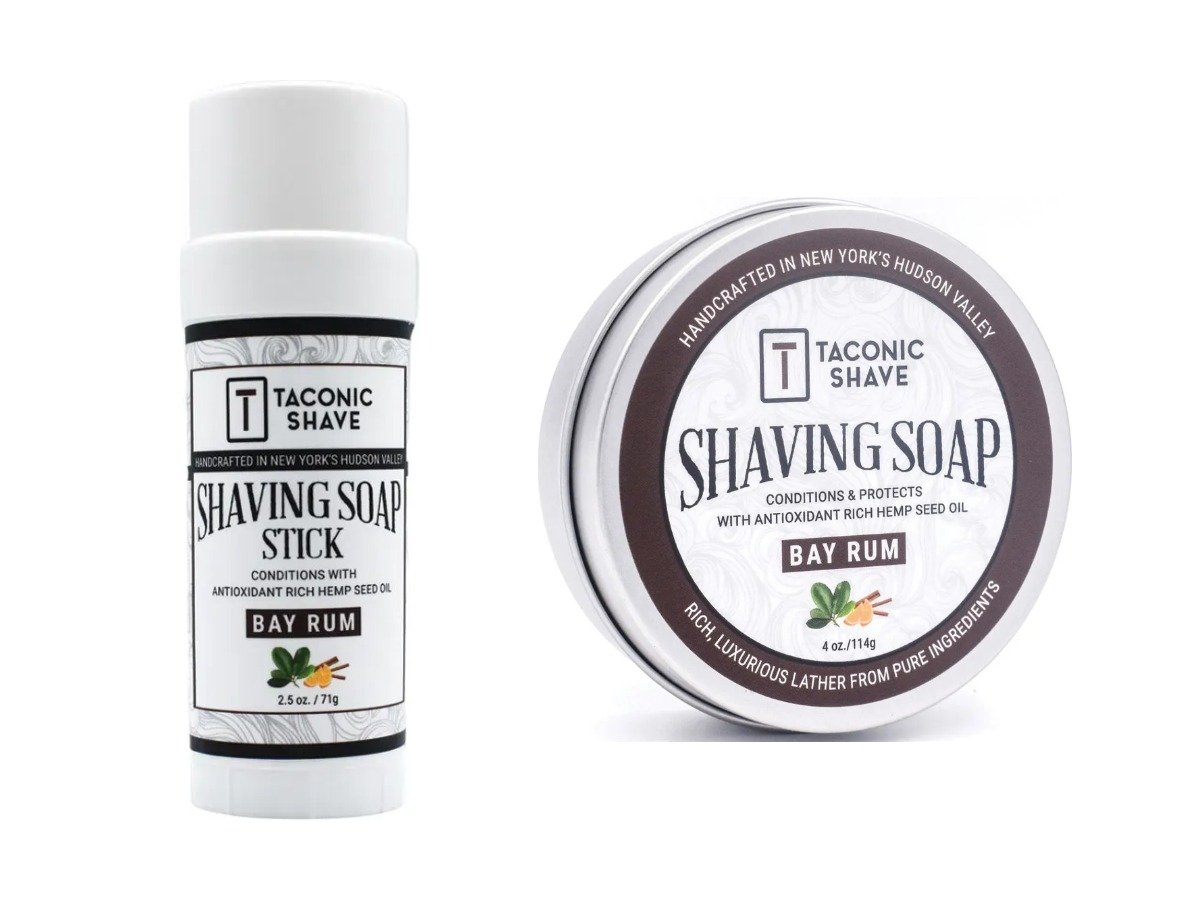
Shave Stick vs Tub Soap: Which One Should You Buy?
A shave stick and a tub of shaving soap can hold the same soap. What changes is size, lathering method, travel and choice.
A double edge razor solves the cost problem and quietly creates a small one that nobody mentions at the start. A cartridge hides its blades inside a plastic frame and goes out in one piece. A safety razor hands you the bare blade, and from that day on you have a steady supply of very sharp steel that has to go somewhere.
The good news is that this has one correct answer, it costs less than most packs of blades, and you buy it once. Here is how to dispose of used razor blades properly, what to do when the container fills up, and how to check the rule where you actually live.
A used double edge blade is blunt for shaving long before it is blunt for skin. Dropped loose into a kitchen bag it tends to settle into a corner and work its way through the plastic, and the person who finds it is whoever lifts that bag next. That may be you. It may also be someone on a collection truck who had no reason to expect it.
Loose blades in the recycling are worse, because recycling is not a sealed system. Bags are opened, material is tipped, moved, sorted and handled, and nothing in that chain is set up for a razor blade travelling through it. Wrapping a blade in newspaper does not fix this either. Paper does not stop steel.
The principle is simple enough to state in one line. Once a blade leaves the razor it should go straight into something rigid that it cannot come back out of, and it should stay in there until it leaves your home.
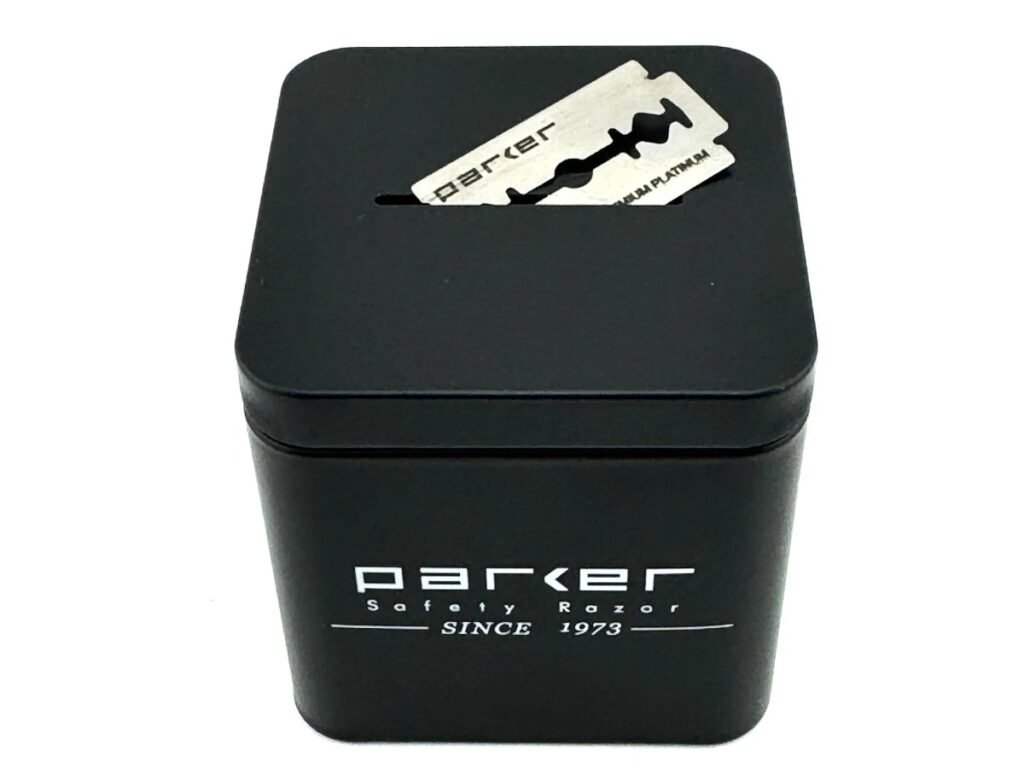
A blade bank is a small metal container built for this one job. Most take blades through a narrow slot, one at a time, with no way to get a hand back inside. It sits on a shelf or in a drawer, it takes years rather than months to fill, and when it is finally full the whole sealed container goes out as metal instead of as loose blades.
It is the least interesting object in a wet shaving setup and the one most people wish they had bought at the same time as the razor itself.
We stock the larger Parker Double Edge Blade Disposal Bank. Parker publishes an all metal body measuring approximately 2.75 in x 2.75 in x 2.8 in, a capacity of roughly 300 blades, and a removable lid. Parker also states it will take blades up to 1.97 in long, so double edge blades fit with room to spare, and so do single edge, shavette and demiplaning blades.
Three hundred is a bigger number than it sounds. If you fitted a fresh blade every Sunday morning without fail, a full bank would still be close to six years away.
The removable lid matters more than the capacity does. It means the bank is not a one way object. When it fills you can put the whole sealed container out as metal, or lift the lid, tip the contents into a larger metal container and carry on using the same bank indefinitely.
Because the Parker bank is all metal with nothing else attached to it, a sealed full container can be handled as scrap metal rather than as household rubbish. Where that goes depends entirely on your municipality. In some places it is a curbside metal collection, in others a drop-off depot or an ecocentre.
If you would rather keep the bank in service, lift the lid and empty it into a larger metal container that closes properly. An empty coffee tin or paint tin is the usual choice. Seal that, put it out the same way, and start the bank again from empty.
Plenty of shavers never buy a bank at all. A taped-shut tin does the job. So does the metal tin some blades arrive in. Folding each blade back into the paper wrapper it came in and taping that into the empty cardboard box is a genuinely tidy method for a small number of blades, and it costs nothing.
The suggestions that fail tend to fail the same way. A plastic bottle holds blades safely enough, but at the end you have a plastic bottle full of steel that no plastic recycling stream will take and nobody can safely open. A glass jar breaks. A cardboard box on its own is not rigid. Anything that has to be opened again later has only moved the problem down the line.
Older houses sometimes had this solved at the design stage. Mid-century bathroom medicine cabinets were often built with a blade slot at the back that dropped used blades straight into the wall cavity, where they collected quietly for decades until somebody renovated. It is a good piece of shaving history and a bad idea to repeat.
Waste sorting in Canada is a municipal matter, so there is no single national rule for razor blades and the right answer genuinely differs from one city to the next. Two lookup tools cover a good deal of the country between them.
In Quebec, RECYC-QUEBEC runs the Ca va ou? tool, which tells you where a given material belongs in your municipality. In Montreal specifically, the city’s ecocentres are the usual destination for metal that does not belong at the curb. In Toronto, the City’s Waste Wizard does the same job.
Anywhere else, search your municipality’s name together with the phrase waste lookup and you will usually find the local equivalent. If the tool does not list razor blades by name, look up what it says about scrap metal and about sharp objects, and treat a sealed metal container accordingly. When in doubt, a phone call to the municipality settles it in two minutes.
The same reasoning applies when you travel, with one extra layer on top. A loose blade in a wash bag is a problem for whoever opens that bag, and a blade in hand luggage is a problem at the security line before you ever reach the gate. We set out the Canadian air travel rules in full in flying with a safety razor in Canada, including where blades can and cannot go.
For a road trip or a weekend away, the simplest arrangement is to take only as many blades as you need, keep them in their wrappers, and bring the used ones home rather than leaving them in a hotel bin.
A bank only earns its place because blades get changed, and how often that happens is personal rather than a number anyone can hand you. It depends on your beard, your razor, your water and the blade itself. What helps is knowing what you are changing between: our guide to choosing the right safety razor blade covers how sharpness, smoothness and coating interact, and carbon steel versus stainless explains why some blades need drying and others are far less fussy.
If you have not found a blade that suits you yet, a blade sampler is the cheapest way to try several without committing to a hundred of any one of them, and it fills a blade bank faster than anything else you will do. Once you know what you like, the full double edge blades range is where to buy in quantity. Our notes on razor and blade care cover the drying and storage side, and if you are curious about where the sharpest blades sit, Feather and the sharpest double edge blades compares the usual contenders.
Buy a blade bank, keep it beside the razor, and put every blade into it the moment it comes out. That single habit removes the entire problem, and a 300 blade bank means you will very likely not think about it again for years.
If you would rather not buy one, use a metal tin that seals and can be recycled whole. The test is always the same: can anyone reach the blades again, and can the finished container leave your house without being opened? If the answer is no and yes, you have it right.
A shave stick and a tub of shaving soap can hold the same soap. What changes is size, lathering method, travel and choice.

A splash is alcohol and evaporates in under a minute. A balm has none and stays. How the two differ, and when each one suits.

A lathering bowl is the least glamorous thing in a wet shaving kit and one of the easiest to buy badly. Most people pick one