(The “golden mean” of shaving—and why your barber uses it)
Most people think a shavette is just a “cheap straight razor.” That’s not quite right.
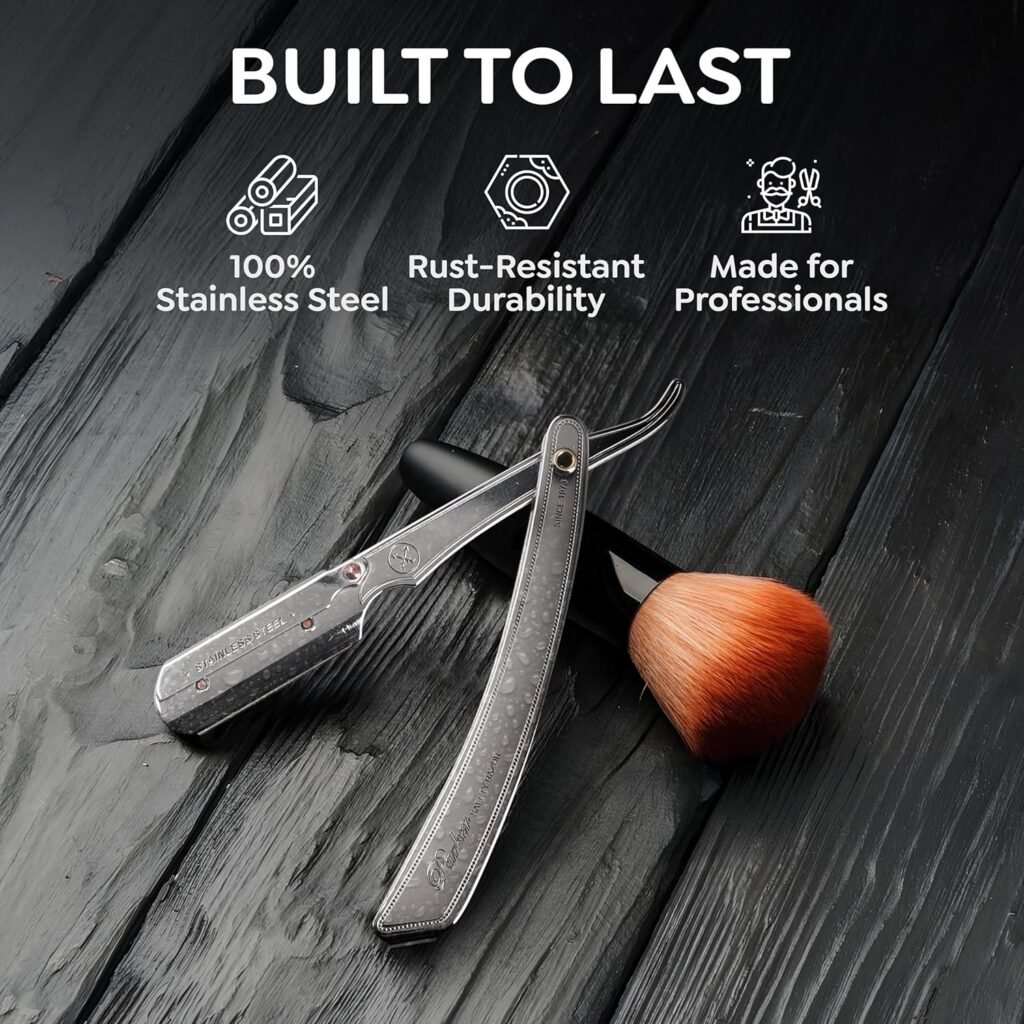
A shavette is its own category of razor. It delivers the precision and control of an open blade, but instead of maintaining a permanently honed steel edge, it uses replaceable blades (often referred to as barber blades). That single design choice is exactly why shavettes became a barbershop standard—and why beginners sometimes underestimate them.
This guide explores where shavettes came from, what they’re designed for, and how to use one safely, along with a few standout Parker models worth considering.
What Is a Shavette?
A shavette is an open-blade razor that uses replaceable blades. It looks and shaves similarly to a straight razor, but without the need for honing or stropping. You install a fresh blade, shave, and replace it when it dulls.
The blade is secured in a holder, locked in place, and ready for use—simple, precise, and consistent.
Why people love them:
Consistent sharpness (a new blade means predictable performance)
No edge maintenance (no honing, no stropping)
Quick blade changes (ideal for professional use)
The closest straight-razor experience without the upkeep
Where Did the Shavette Come From? (Hygiene Over Tradition)
Shavettes didn’t become popular because they were cheaper—they became popular because they were practical.
In professional barbershops, reusing a traditional straight razor on multiple clients raised obvious hygiene concerns. Barbers needed the control of an open blade with the ability to use a fresh blade for every client.
That’s where companies like DOVO Solingen helped popularize the replaceable-blade system—and the term shavette itself. Modern manufacturers like Parker have since refined the design into a durable, well-balanced tool suitable for both professionals and home shavers.
Takeaway: shavettes solved a real-world problem—open-blade precision with modern hygiene and convenience.
Shavette vs Straight Razor vs Safety Razor
Here’s the clear distinction:
Straight razor: maximum tradition and potential smoothness, but requires regular edge maintenance and strong technique
Shavette: open-blade control with no edge maintenance, but sharper-feeling and less forgiving
Safety razor: the easiest learning curve and most forgiving design for daily use
If you want the open-blade experience without turning sharpening into a second hobby, a shavette sits right in the middle.
The “Weight Trap” (How Beginners Get Cut)
Most shavette injuries come from one mistake: pressure.
Traditional straight razors are often heavier, encouraging a natural glide. Many shavettes are lighter, which tempts beginners to press harder to compensate.
Don’t.
A shavette blade is extremely sharp. Pressure is punished immediately.
Why Parker Is a Great Starting Point
Parker shavettes are popular for a reason: they tend to feel solid and well-balanced, helping you let the blade do the work instead of forcing the shave. That balance matters—especially while learning.
Mastering Technique (The 30° Rule)
A shavette has no safety bar or guard. Your technique is the safety system.
The Golden Rules
Angle: about 30°
Too steep causes scraping and irritation. Too shallow leads to skipping and tugging.
Stretch the skin
Use your free hand to keep the skin taut, especially on the neck and jawline.
No-pressure glide
If it tugs, fix your lather or angle—never add pressure.
Short, controlled strokes
Particularly important around curves and tight areas.
The 3-Pass Method (Progressive, Not Aggressive)
Pass 1: With the grain (bulk reduction)
Pass 2: Across the grain (refinement)
Pass 3: Against the grain (optional)
The final pass delivers the closest results—but it’s also the highest risk. Earn it.
⚠️ Mustache danger zone:
Avoid shaving upward toward the nose. Keep strokes controlled and angled away from the center.
Choosing Your First Parker Shavette (Top Picks)
1) Heavyweight Confidence Pick: Parker SRX
For those who want the most straight-razor-like feel. Substantial in hand, stable, and confidence-inspiring.
Parker SRX Razor
2) Classic All-Rounder: Parker SR1 (Clip Type)
A dependable, traditional format that feels familiar and balanced.
Parker SR1 Stainless Steel Clip-Type Shavette
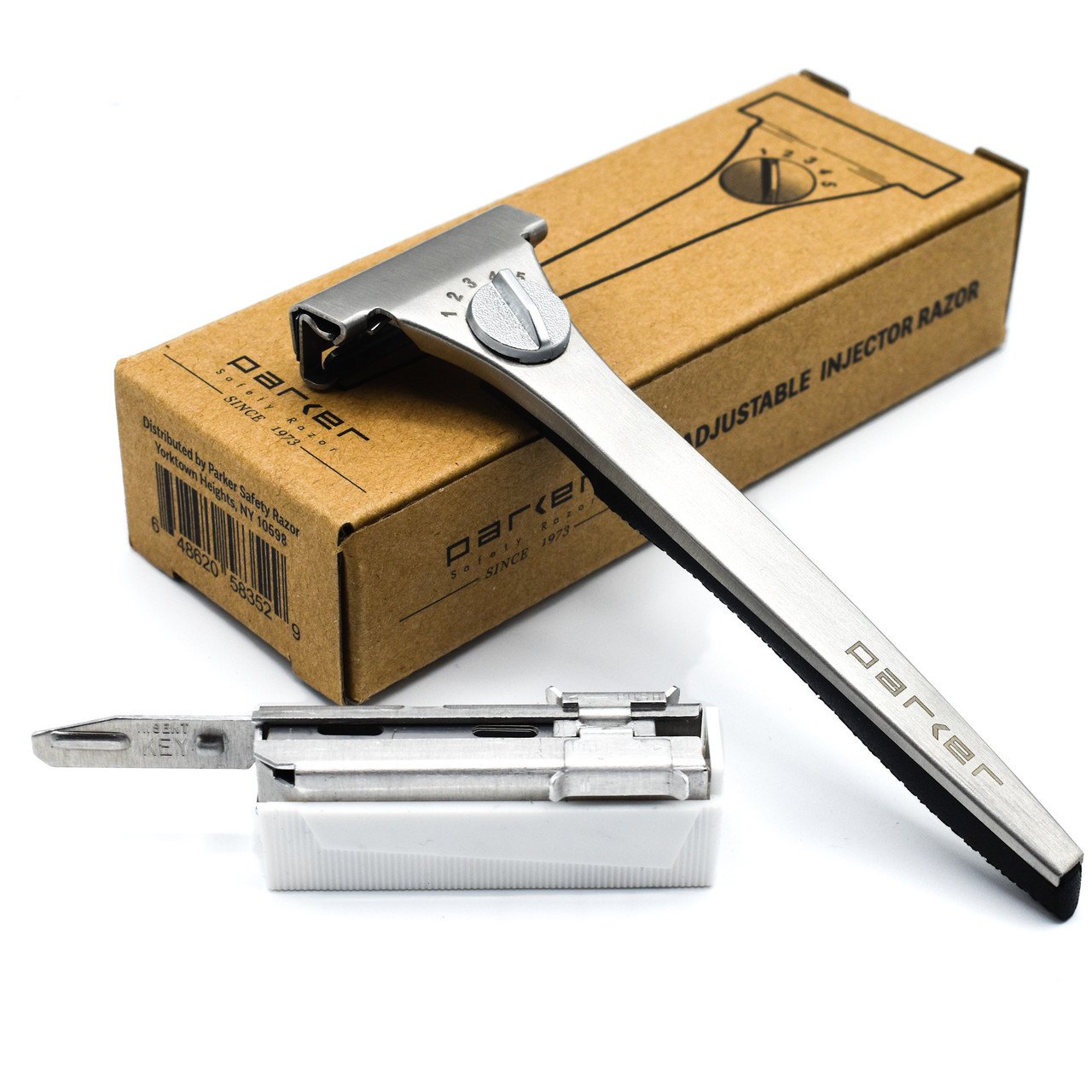
3) Adjustable & Easy-Loading Option: Parker PTABK
Offers adjustability and convenience, making it easier to fine-tune blade feel.
Parker PTABK Adjustable Stainless Black Handle Shavette
Final Thoughts
A shavette is one of the most rewarding tools in wet shaving—if you respect the blade. Use a light touch, control your angle, stretch the skin, and build skill gradually.
If you’re looking for a shavette that feels well-made and confidence-inspiring, Parker offers excellent options—whether you prefer heavyweight stability (SRX), a classic all-rounder (SR1), or adjustable control (PTABK).
Ready to master the open blade?
Browse our full Parker Shavette Collection